
After seven long years, key documents surrounding the Ukraine impeachment saga have finally been released by the House Permanent Select Committee on Intelligence, following Director of National Intelligence Tulsi Gabbard’s declassification. They include previously unreleased interview transcripts with the Inspector General as well as related materials. They tell a story many of us suspected at the time, but which now appears even more disturbing and more elaborate than originally understood.
The newly released documents show a coordinated effort to frame President Trump over a phone call with Ukrainian President Zelensky. A manufactured narrative was elevated and then used by Congress in an attempt to overturn the outcome of an election and, effectively, shape the next one by pursuing impeachment over a routine diplomatic exchange.
Inspector General Michael Atkinson, who should have acted as a neutral gatekeeper, instead enabled the process by allowing a completely unverified, third-hand, and politically motivated complaint to move forward.
Of particular note is the timing. The call took place on July 25, 2019, the morning after the disastrous congressional testimony of Special Counsel Robert Mueller, which effectively collapsed the Russia collusion narrative. Many suspected at the time that this timing was not coincidental. It was as if one hoax had collapsed and another was needed to take its place. The new material strengthens that view.
What we previously knew was that a so-called whistleblower, Eric Ciaramella, an Obama-era National Security Council staffer, filed a complaint with the Inspector General of the Intelligence Community, Michael Atkinson, alleging that President Trump had attempted to interfere in the upcoming 2020 election during the call with Zelensky.
The newly released documents, specifically the interview notes from Congress’s classified interview with Atkinson, together with the so-called whistleblower complaint and its supporting materials, bear little resemblance to what actually happened when set against the official transcript of the call released publicly by Trump in 2019.
Ciaramella alleged that Trump was using the power of his office to “solicit interference from a foreign country in the 2020 U.S. elections” and was pushing Ukraine to investigate his “main political rival,” Joe Biden, who at the time was polling at around 26 percent in the Democratic primary. He further suggested that Rudy Giuliani and Attorney General Bill Barr were involved in the alleged scheme to interfere in the 2020 election.
In fact, the official call transcript contains no evidence of election interference. It shows, at most, that Trump referenced widely reported public information, specifically Joe Biden’s own 2018 Council on Foreign Relations admission in which he described leveraging U.S. taxpayer loan guarantees to secure the firing of the Ukrainian prosecutor who was at that time investigating Hunter Biden’s firm, Burisma, and had already moved to seize assets connected to it.
As later emerged from material found on Hunter Biden’s abandoned laptop, there were emails from the chairman of Burisma’s board of directors explicitly describing the shutting down of the investigation as a required “deliverable” and demanding that Hunter Biden intervene to bring it to an end, shortly before Joe Biden took steps that did exactly that.
In other words, far from constituting election interference, Trump was raising matters that were already in the public domain and, on any reasonable view, within the scope of legitimate diplomatic discussion, given U.S. financial exposure and foreign policy interests. At minimum, it is entirely plausible that he was also probing the disposition of the newly elected Ukrainian president by testing his response to issues involving his predecessor.
Hearsay, Process Breakdown, and the Whistleblower Standard
The claims made by Ciaramella point directly to the issue at the heart of this process, namely the standard applied to whistleblower complaints. These mechanisms exist to prevent rumor chains and guard against the kind of distortion that arises from indirect reporting. Traditionally, such complaints were required to be based on first-hand knowledge. In this case, that standard was not met.
As originally reported by The Federalist in 2019, Atkinson eliminated the longstanding requirement for first-hand knowledge by changing the rules governing whistleblower complaints around the time Ciaramella’s complaint was filed, allowing second and third-hand information where first-hand knowledge had previously been required, and doing so secretly, without disclosing the change and later backdating it.
In the newly released documents, Atkinson characterizes the timing as coincidental, stating, “So the timing is unfortunate. It looks suspicious, I get that.” But the record shows he altered and effectively gutted its own internal standards at the exact moment a third-hand complaint about President Trump was emerging.
Even setting aside intent, the concealment of the change and its later backdating are difficult to reconcile with the idea that this was a coincidence.
Once you move away from first-hand reporting, you are effectively relying on a chain of hearsay. Even without assuming bad faith, the reliability of information degrades rapidly as it is passed along. In this case, the complaint was based on second, third, and even fourth-hand accounts. When compared to the official call transcript, the distortion is obvious.
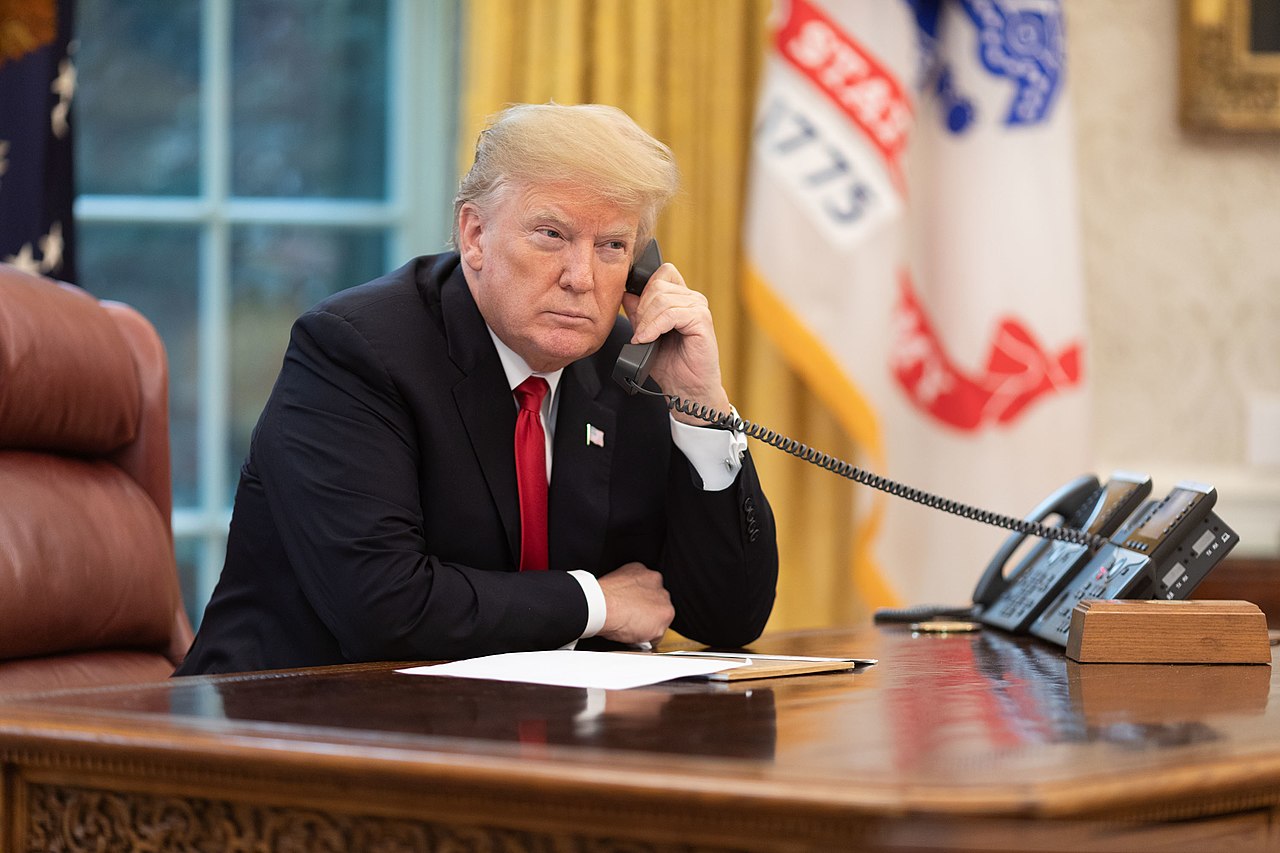
On the morning of the call, President Trump spoke with President Zelensky. Multiple officials from the National Security Council were monitoring the call. One of those officials, identified as NSC#1, reportedly relayed a summary of the call to Ciaramella. Another NSC official, NSC#2, also provided information about the call, though he was not a participant and relied on a readout or transcript.
According to the newly released documents, NSC#2’s account became a significant source for the complaint. However, NSC#2 was not a participant in the call. He relied on a secondary document, apparently a transcript of the conversation, which he or she only briefly reviewed before returning it.
As a result, the information passed to Ciaramella was already detached from the original event, moving from the call itself to a transcript, then to NSC#2, then to Ciaramella, and finally to Atkinson. Even assuming no bad faith at any stage, which there is no reason to assume, this is a process almost guaranteed to produce distortion. At minimum, this is third-hand information. In practical terms, given the structure described in the documents, it is more likely fourth-hand hearsay.
In a properly functioning system, such a complaint would have been rejected at the outset as unreliable and speculative. Instead, it was accepted and triggered an impeachment, only the third such impeachment in American history.
This is where the Mueller testimony becomes relevant again. The collapse of the Russia collusion narrative on July 24 was immediately followed the next day by the emergence of the Ukraine impeachment hoax. The sequence is too tight to dismiss as a coincidence. The newly released material only reinforces that conclusion.
As the documents reveal, the call with Zelensky was arranged on short notice, with Ciaramella claiming that “the NSC had been trying to get President Trump to speak to President Zelensky for quite some time.” The question naturally arises as to how and why that conversation was scheduled and structured in the way it was, and whether NSC officials anticipated the topics that might arise, particularly references to Biden-related corruption allegations that were already publicly being discussed at the time.
It is undisputed that Joe Biden publicly described conditioning U.S. taxpayer loan guarantees on the removal of a Ukrainian prosecutor investigating Burisma, the company that was paying his son $1 million per year. In that context, the idea that Trump might raise the issue in a call was not implausible.
What followed, however, was the construction of a narrative that reframed the call as election interference. While this may have been viewed as simply opportunistic in the moment, the new documents at least raise the possibility that it was premeditated.
Conflicts of Interest, Suppression, and the Broader Operation
Perhaps the most significant development emerging from the new documents is the role and serious conflicts of interest of Ciaramella himself, all of which were concealed by Atkinson. Ciaramella was not a detached observer of the Ukraine situation. He was deeply involved in the events surrounding the firing of the prosecutor. At the time of Biden’s ultimatum to remove the prosecutor, Ciaramella served as Director for Ukraine on the Obama National Security Council and was involved in organizing the now infamous January 2016 meeting with the Ukrainian prosecutor’s team, conspicuously excluding the prosecutor general, at which the Ukrainians were told for the first time that the prosecutor general had to go.
Joe Biden’s ultimatum to the Ukrainian president followed soon after and resulted in the removal of the prosecutor general. Ciaramella was not simply reporting events to Atkinson — he was covering his own tracks.
These connections to Biden, as well as Ciaramella’s direct entanglement in the underlying subject matter that ultimately became central to Trump’s impeachment, were never disclosed during the impeachment saga. Nor was the fact that he had been in contact with Adam Schiff, then chairman of the House Intelligence Committee. In fact, during questioning of Atkinson, then Congressman and now CIA Director John Ratcliffe exposed that Ciaramella had misrepresented his contacts with Schiff. As the newly released interview transcript shows, Schiff himself then intervened during questioning and jumped in to claim that when he denied the contact as well, he meant that Ciaramella had not been “permitted to testify,” not that he had not been in contact. This exchange alone, which occurred months before Trump’s impeachment, should have been enough to immediately end the entire charade.
Finally, the role of the media cannot be ignored. When Ciaramella was identified as the whistleblower, there was an all hands on deck effort by corporate media, social media platforms, and Big Tech to suppress that information. Accounts were terminated, and any mention of Ciaramella’s name was immediately shut down.
That suppression had catastrophic consequences. It prevented public scrutiny of Ciaramella’s relationships, dependencies, and conflicts that are only now coming into view. Had those facts been available at the time, the trajectory of the impeachment effort would likely have been very different. In fact, as early as 2017, Trump supporters were ridiculed for pointing to Ciaramella as an anti-Trump operator, pro-Ukraine partisan, and serial leaker. Those claims have since proven to be accurate. Had the public been allowed to connect those dots, the entire narrative would have collapsed far earlier.
In the end, this was never a genuine complaint. And it wasn’t an opportunistic hit job either. It was something far more deliberate, a coordinated effort involving NSC staff, Adam Schiff and his allies in Congress, and a compromised Inspector General, all working in concert to target Trump. It served a dual purpose. It damaged Trump while insulating Biden from scrutiny over Ukraine-related issues that were already widely known.
And it worked. The Ukraine issue was effectively removed from the 2020 campaign. When it resurfaced through Hunter Biden’s abandoned laptop, the same actors deployed the same playbook, dismissing it as Russian disinformation and ensuring that the underlying facts were again kept from public view.
Those facts are only coming out now, thanks to Tulsi Gabbard, but seven years too late. Not coincidentally, that delay means the statute of limitations for bringing charges has now expired, and no one will ever be held accountable.