
If you haven’t got your own pets – or even if you have – the idea of a cafe that comes with a snuggle from a furry friend is hugely enticing for animal lovers.
In recent decades, animal cafés have boomed across the globe, with around 40 currently operating in the UK alone.
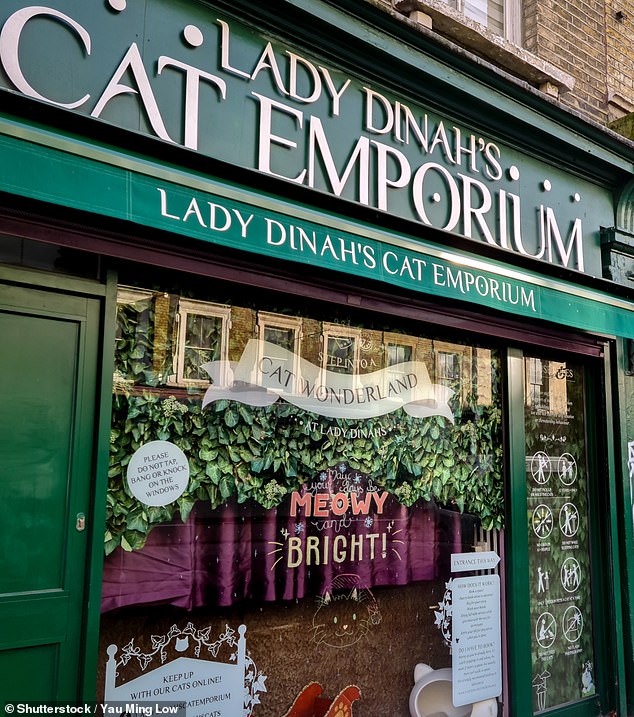
In London’s Greenwich, for example, visitors are treated to Alice in Wonderland-style aesthetics at Lady Dinah’s Cat Emporium, the UK’s longest-running cat cafe, while Nottingham’s Kitty Café doubles up as a cat rescue centre, housing around 25 lovable critters.
Beyond feline-based venues, other animal cafés have also now emerged on UK shores; it’s possible to pet pugs, dachshunds or corgis at various dog cafés – as well as rabbits and even pigs too.

The UK is now home to around 40 animal cafés, including CuppaPugs and Lady Dinah’s Cat Emporium (pictured) in London – but could the concept be a wider welfare issue?
At King’s Dog Daycare in west London, guests typically pay £20 for a drink and a Pet-A-Pooch experience with chow chows.
On the other side of the Thames in Hackney, visitors can sip pug-themed drinks at CuppaPug, home to around a dozen free-roaming pugs.
Elsewhere in the world, the animal café concept has grown to include a myriad of other animals.
Poland debuted Europe’s first rabbit café in Krakow in 2022 with the launch of the pink-themed Bunny Cafe, while Japan recently opened its first micro pig cafe in Tokyo’s tourist heart.
How does it work? It varies but generally guests pay an entry fee, order a drink and then lose themselves in a joyful swarm of playful four-legged companions.
So far, so wholesome… but is there a darker side to the animal cafés tourists love?
With such experiences often leaning heavily on rescue animals and specialised breeds, could there be a wider welfare issue?
While a large number of supporters value animal cafés for offering rescues a safe space to socialise and even find permanent homes, critics also worry that constant handling could trigger anxiety.

Experts worry that constant handling of cats, dogs and other animals in such cafés could trigger anxiety and eventually lead to disengaging from human contact

The Mipig cafe on touristy Takeshita Street in Tokyo’s Shibuya district
Paul Wilson, founder of the Loose Lead Club, which specialises in caring for reactive and anxious dogs, said: ‘The animals most likely to struggle in a café setting are the ones I work with daily.
‘The concept isn’t the problem – the execution is. Done well, animal cafés deliver real enrichment, socialisation and (for rescue-led models) an adoption pipeline.
‘Done badly, they manufacture the exact reactivity issues I spend my career undoing.’
To operate an animal café in the UK, businesses that keep animals ‘for exhibition’ are generally expected to obtain a licence from their local council and meet standards covering animal welfare, staff training, accommodation, food safety and hygiene.
Where the animals actually come from varies between cafés.
Many cat cafés work closely with rescue centres and shelters. According to BBC News, around 60 per cent of animals in cat cafés are rescued or surrendered.
Dog cafés often operate differently. While some host temporary events with owners and their pets, others keep permanent resident dogs that are often centred around popular breeds, like pugs, corgis and dachshunds.
In order to maintain these unique experiences, when not rehomed, some 30 or 40 per cent of these breeds are purchased directly from registered breeders or sometimes imported from abroad.

In specialised breed cafés across the world, some 30 or 40 per cent of dogs are purchased directly from registered breeders. In turn, this fuels a market for unregulated puppy farms and rogue breeders
Unfortunately, as such cafés have become increasingly fashionable, they’ve fuelled a market for rogue breeders and unregulated puppy farms – with many well-meaning buyers inadvertently sourcing pups from these such facilities without knowing their true origin, according to The Kennel Club.
In March 2025, the RSPCA and Cats Protection called for cat cafés to be ‘phased out’ across the UK, arguing it is ‘almost impossible’ to consistently meet the welfare needs of cats in such environments, as highlighted by The Independent.
The charities said that in 2025, more than 30 licensed cat cafés were operating in England, with a 44 per cent increase in licences granted during the previous financial year alone.
Their main concern is that cats are naturally territorial and often prefer solitude, meaning constant exposure to unfamiliar people and other animals can cause stress, even when the signs are difficult to spot.
They are now calling on local authorities to cease issuing new licences and to stop renewing existing ones.

While many support the idea of dog and cat cafés, the RSPCA and Cats Protection called for them to be ‘phased out’ across the UK
Welfare experts also warn that animals may have limited control over when they interact with visitors, potentially turning them into part of the entertainment rather than prioritising their needs.
Mike White, pet expert and head of breeder success at Pets4Homes, said: ‘When an animal café operates first and foremost as a café business that happens to include animals, commercial pressures inevitably shape decision-making.
‘Footfall, customer experience and profitability begin to compete with, and in some cases override, the slower, more cautious requirements of animal welfare.
‘Even with good intentions, this can lead to environments that prioritise visibility and interaction over rest, retreat and species-appropriate care.’
He added: ‘That can mean animals being exposed to constant handling, noise and stimulation, with limited control over when they can disengage from human contact. These are not trivial considerations; the ability for an animal to avoid interaction is a core component of good welfare standards.
‘There is also a broader regulatory question. Without clear and consistently enforced licensing standards, the quality of these establishments can vary significantly, leaving welfare outcomes dependent on individual operators rather than robust, system-wide safeguards.’
But not everyone agrees. Many café owners state on their websites their animals have access to private areas away from customers, receive regular veterinary care, and are closely monitored for signs of distress.
While the UK continues to see a steady stream of animal cafés hitting high streets – with the nation soon set to have its very own Capybara café – several have closed in recent years due to financial pressures, licensing challenges or changing business models.
Glasgow’s Purrple Cat Café, for example, announced it would close its café operation and focus instead on its rescue and rehoming work.
The question of value for customers is also up for debate – with entry fees at many UK animal cafés ranging from around £10 to £30 per person, often including a drink or a timed session with the animals.
Operators say the money helps cover veterinary bills, specialist staff, insurance, food and enrichment, while critics argue visitors are effectively paying for access to animals rather than a traditional café experience.
For animal lovers, the appeal is easy to understand: a coffee, a comfortable chair and the chance to spend time with cats, dogs or rabbits. But as the industry continues to grow, so does the debate.
It appears the future of Britain’s animal cafés ultimately lies on whether operators can show the experience benefits the animals – as much as it does the customers.