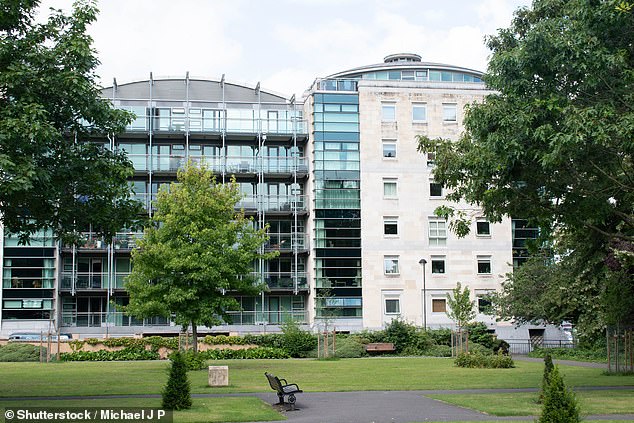
My partner and I are living in a leasehold two bedroom flat, which we bought in early 2021. While we are happy at the property, we are concerned by the rise in service charge since we moved in.
In five years it has risen by almost 50 per cent, going from £2,560 to £3,812. The buildings insurance is charged separately at about £600 per year, so altogether we are now paying £4,400.
It is a high end development and comes with a gym, concierge and swimming pool, but the service charge is split between more than 500 flats.
We have queried the rising costs with the managing agent and they said it was due to ‘higher staffing costs, regulatory pressures and increased material costs’ as well as ensuring they have ‘enough in reserve for major works.’
My pay has only risen 25 per cent since we have lived here and my partner’s by much less, so these costs are becoming a real burden. What’s more, our flat has fallen in value since we bought it.
Is there anything we can do to challenge our service charge bill?

Charge condundrum: The service charge on our reader’s leasehold apartment is rising, but should they challenge it? (stock image)
Ed Magnus of This is Money replies: You are right to be worried by this. A rise of nearly 50 per cent over five years is not sustainable in the long term.
Not only could the service charge become a financial drain on yourself and your partner, but it could make it harder to sell the flat in the future.
Service charges vary greatly depending on the type, size and location of the property as well as any extra amenities.
The average amount charged increased by 41 per cent in the five years between 2019 and 2024, according to The Property Institute, with the average leaseholder paying £3,634 per annum.
That is not far from what you are paying, so while your situation is a difficult one it is unfortunately not unusual.
While I have come across examples of reasonable service charges and management, there are too many cases of leaseholders being charged huge bills for very little in return.
It does sound like there are some premium facilities on offer which will mean the service charge is higher than average.
That said, with 500-odd flats in your development, you might hope that increases to staff salaries and gym or swimming pool maintenance could be absorbed with only minor increases.
Service charges are an issue because the people that pay them often have no control over the budget or even the tradesmen used.
Meanwhile, the people that do control the service charge costs – the freeholders or their managing agents – often have no incentive to keep costs down.
So what can you do? For expert advice, we spoke to Sebastian O’Kelly, director of the charity The Leasehold Knowledge Partnership, Nicholas Kissen, senior legal adviser at the Leasehold Advisory Service (Lease) and Liam Spender, the head of campaign group Leaseholder Action and head of real estate litigation at Velitor Law.
Join the discussion
Are rising service charges making homeownership unfair or out of reach for many leaseholders?

Our reader’s annual bill this year has increased by a further 9 per cent to reach £3,812 with buildings insurance paid separately
What homes have the highest service charges?
Liam Spender replies: Service charges are a common and increasing cause of concern. Whether or not your charge is reasonable depends on factors such as the amenities, age, location and size of the building.
Tall buildings in big cities, older buildings and listed buildings are all likely to have higher maintenance costs and therefore higher service charges.
Older buildings may also require replacement of plant and machinery such as lifts and water pumps. Roofs and windows are also costly long-term maintenance expenditures.
Why does their service charge keep going up?
Sebastian O’Kelly replies: I am afraid that you are in the company of thousands of other leaseholders, particularly in new builds, who have seen service charges soar and the value of their properties plummet.
Service charges have ramped up because of outside pressures under no one’s control. Utilities have surged since the Ukraine crisis, the cost of building works has risen above inflation and staff costs are higher.
So if a development has major works in the offing, then service charges are going to rise. In higher-end developments, these works can cost even more.
Luxury penthouses in some blocks in Manchester and London are currently selling for 50 per cent less than the price paid 10 years ago, as the service charges are so high buyers are completely put off.
While a 50 per cent rise in service charges over five years is certainly bad, it is sadly not exceptional.

Liam Spender, the lawyer behind Leaseholder Action claim
Liam Spender adds: Service charges are running ahead of inflation because of increases in the National Living Wage and Employer National Insurance [which mean maintenance firms and property management companies need to pay their staff more].
Higher energy and fuel costs are also driving up service charges.
In some cases significant costs also come from compliance with the Building Safety Act 2022 and Fire Safety Act 2021, which can require costly surveys, record-keeping and more frequent inspections.
But not all increases are justified. Insurance and utilities are often pushed up by secret commissions paid to landlords and managing agents.
Buildings may also be subject to unfavourable long-term contracts.
Do leaseholders have any control over service charge?
Nicholas Kissen replies: There is no limit on how much variable service charges can increase, provided the charges are reasonable, allowed under the terms of the lease, and that any work undertaken and services provided are to a reasonable standard.
The starting point is to check the lease. It should explain what the landlord or managing agent can charge for, how the leaseholder’s specific share of the costs is calculated, and whether contributions to a reserve or sinking fund are allowed.
In a modern development with luxury facilities such as a gym, concierge and swimming pool, the lease will be important in showing what services are included and how costs are shared.

Sebastian O’Kelly, director of the charity The Leasehold Knowledge Partnership
Sebastian O’Kelly adds: What sends leaseholders into a fury is that they cannot control these costs.
This is far worse in the majority of cases when an outside third party landlord owns the freehold, appoints the management company and controls the fees paid for things like insurance and keeping pets.
Where leaseholders themselves control the management, through resident management or right to manage companies, the management charges are around 20 per cent less in our experience.
How can leaseholders check service charge costs?
Nicholas Kissen replies: The leaseholder should ask, in writing, for a clear breakdown of the service charge and for a summary of the service charge account.
After receiving a summary, they also have the right to inspect accounts, receipts and other supporting documents.
This can help them understand whether increases are due to particular services, staffing, maintenance, management costs or reserve fund contributions.
Can leaseholders challenge service charge increases?
Nicholas Kissen says: If they believe the charge is unreasonable, not required by the lease, or that the work or service was not necessary or not carried out to a reasonable standard, leaseholders should set out their concerns in writing and keep records of all correspondence.
We generally advise leaseholders to pay under protest while seeking advice, rather than withholding payment, as non-payment may breach the lease.
If the issue cannot be resolved, mediation or an application to the First-tier Tribunal may be appropriate. The tribunal can decide whether the charge is payable and reasonable.
Liam Spender says: Costs can be challenged at the First-tier Tribunal in England or the Leasehold Valuation Tribunal in Wales.
You may need legal advice to help prepare your case because the onus is on you to show something is wrong.
Service charges must be demanded in the correct form, at the correct time and be payable under the terms of the lease.
Some types of works and long-term agreements are subject to statutory consultation requirements.
By law service charge costs must also be reasonably incurred, meaning that they must cost no more than reasonably required and be for goods and services of a reasonable standard.
Where a service charge is properly due, any successful challenge is likely to require you to produce like-for-like evidence of lower costs.