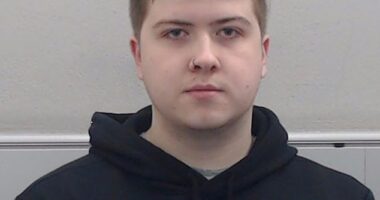
The second day of preliminary hearings for the trial of Charlie Kirk’s alleged assassin, Tyler Robinson, saw the introduction of some of the most consequential evidence yet, including video evidence of what appear to be Robinson’s movements before, during, and after the shooting.
Utah state prosecutors were also able to make major headway in establishing the basis for a victim-targeting enhancement on the capital murder charge against Robinson — though the testimony presented has not been officially admitted by the court just yet.
Like Monday’s hearings, Tuesday’s hearings saw the introduction of new people whose roles readers must be familiar with if they are to understand the investigation, fact pattern, and trial.
Personnel
State of Utah
Ryan McBride, General Crimes Division Chief, Utah County Attorney’s Office. According to his bio, McBride is “a seasoned career prosecutor with over two decades of experience handling some of Utah’s most complex and high-profile criminal cases. He currently serves in the Utah County Attorney’s Office, where he has built a reputation for his meticulous trial preparation, legal expertise, and unwavering commitment to justice — particularly in cases involving homicide, sexual violence, and other violent crimes.”
Robinson Defense
Michael Burt, a criminal defense attorney who has defended several high-profile defendants, including Lyle Menendez, one of the Menendez brothers, who were convicted in the 1989 killing of their parents. Burt’s 1993 defense of Menendez ended in a mistrial.
Burt was also an attorney for the 1996 Atlanta Summer Olympics pipe bomber, Eric Robert Rudolph, who killed one and injured more than 100 others, and Richard Ramirez, “the serial killer known as the Night Stalker, who murdered at least 13 people in the 1980s,” as noted by Court TV.
Burt also argued some of the First Amendment issues for Robinson’s defense, regarding media access to certain exhibits.
Media
David Reymann is an attorney representing the interests of the news media. The media is not a party to the case, but has an interest in certain aspects. While Judge Tony Graf has allowed quite a bit of transparency with regard to the media, Reymann has argued that cameras should be able to capture more of the exhibits than has been allowed in some cases.
Witnesses
- State witness 3: Jennifer Faumuina, a sergeant at the Utah Department of Public Safety’s State Bureau of Investigation. She is the team lead for the evidence response team.
- Defense witness: Amanda Bakker, a 10-year veteran forensic examiner in the DNA casework unit at the FBI, headquartered in Quantico, Virginia.
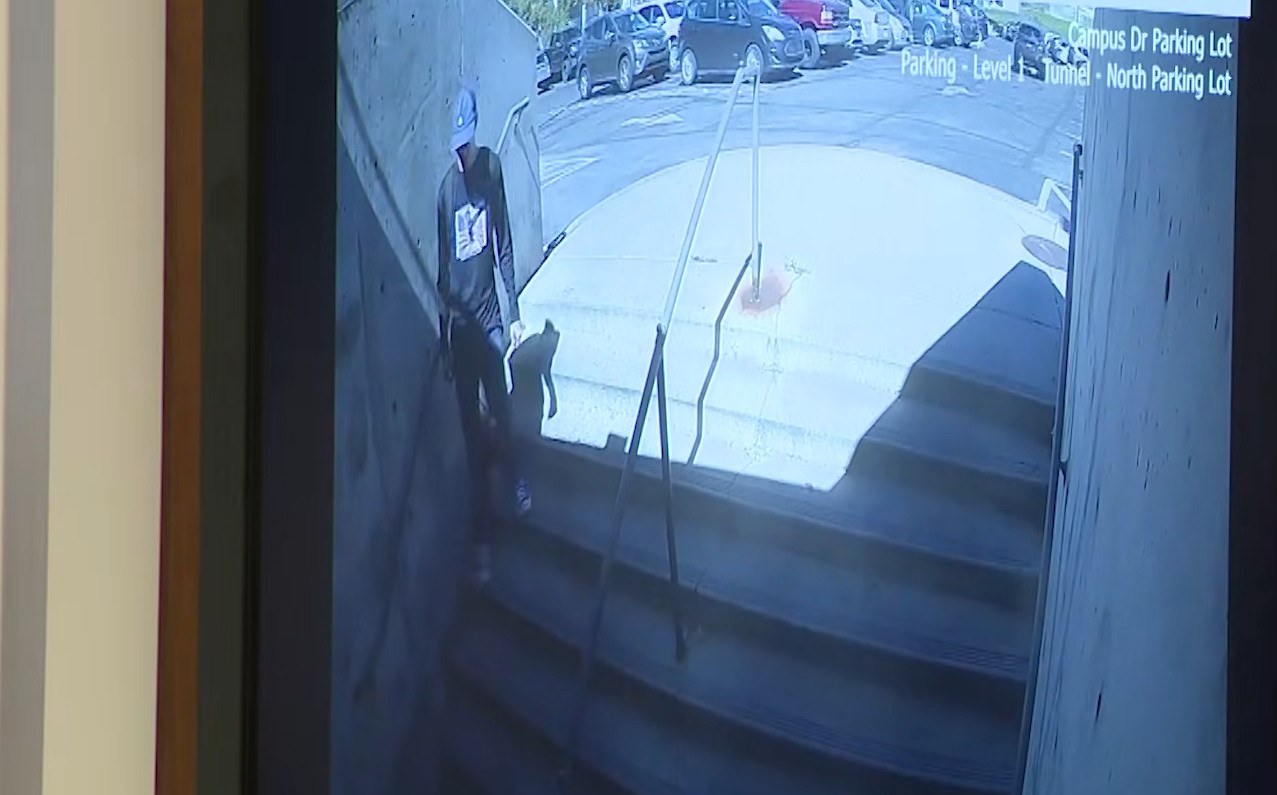
Day two started off where day one ended, with state prosecutors trying to admit an exhibit of a compilation of videos showing a man alleged to be Robinson entering and leaving campus four times throughout Sept. 10, the day Kirk was assassinated, and the early morning of Sept. 11.
While Graf decided that the initial video offered by prosecutors was inadmissible due to alterations made, such as highlighting, zooming, and red circles directing a viewer to focus on certain aspects of the video, prosecutors were able to find the raw footage that the judge then accepted and allowed to be broadcast to the news media.
Prosecutors then tried to re-admit the initial, altered video into evidence, which Graf allowed, but he declined to allow the news media to view it.
Robinson’s alleged movements on campus show him coming and going twice in the morning of the shooting. The first video shows him parking a silver Dodge Challenger, which Utah Department of Public Safety Agent David Hull testified belonged to Robinson, and moving through a parking garage. According to Hull, Robinson made contact with Turning Point USA representatives on this first visit to campus on Sept. 10.
The second video shows the man alleged to be Robinson entering campus on foot, where Hull said Robinson then ate Chick-fil-A around 11 a.m.
The third video shows the man alleged to be Robinson coming to campus, now with a “limp.” While not directly asserted by prosecutors, that “limp” is implied to be caused by a concealed rifle in Robinson’s pants.
The man is shown going to the Losee Center building, where witnesses on Monday said they found a “sniper pad” in the gravel on the roof. The man can be seen lying “prone” during the time of the shooting and leaving seconds after shots were fired, though the video does not show exactly who fired the shots. Hull testified that the shots were fired while the individual was on the roof, according to the timeline, and that the person on the roof is, in fact, Robinson.
The man alleged to be Robinson can then be seen jumping off the roof with a long, rifle-like object in his hand concealed by a cloth. The individual no longer has a limp.
In a fourth video, a man alleged to be Robinson can be seen returning to campus just past midnight. TPUSA’s Andrew Kolvet suggested that his return to campus is in connection with a message from Robinson saying he was returning to the scene to retrieve his rifle “unseen.”
After Graf allowed these videos to be admitted over the objections of Robinson’s attorneys, the defense launched its single most intense argument for rejecting an exhibit at the testimony of Pastor David Engelhardt, a friend of Kirk’s who also serves on the board of TPUSA.
That written testimony detailed the political and religious beliefs and motivations of TPUSA and Kirk, including beliefs about transgender ideology, and seems to be used to develop an inextricable link between Kirk’s beliefs and the motivations of Robinson in allegedly assassinating him. State prosecutors seemed to be introducing Engelhardt’s testimony to establish the groundwork for a “victim targeting enhancement” on the capital murder charge.
Robinson attorney Richard Novak objected to its inclusion, however, making a long argument about its relevancy, stating it might “confuse” a jury pool into thinking this case was about religion and not murder. In order to justify the enhancement, Novak argued, the state would have to show evidence of Robinson’s state of mind to find a motive to allegedly murder Kirk.
“I understand in today’s world that there is a crossover between religion and politics,” Novak said. “I think we can all acknowledge that, but the legislature and the information here are focused on political expression, so I’m concerned that [affidavit] statement of Mr. Engelhardt goes far beyond the scope of what would be admissible if the state has it to prove that Mr. Robinson targeted Mr. Kirk because of Mr. Robinson’s belief or perception concerning Mr. Kirk’s political expression.”
Exhibits linking Robinson’s alleged state of mind and ideology to the beliefs of TPUSA were not yet entered, and based on Novak’s arguments, Graf only “provisionally” allowed the testimony until it can be viewed in the context of the rest of the relevant information. Consequently, the testimony was not published to the court or the media — and whether it will be fully allowed and published will be determined at a later time.
State prosecutors presented Faumuina to establish the forensic fact that law enforcement found both Robinson’s DNA and the DNA of Lance Twiggs (Robinson’s roommate and apparent trans-identifying lover) on a towel wrapped around a rifle, as well as on a screwdriver located on the roof of the building.
Robinson defense attorney Michael Burt spent hours attempting to discredit the forensic analysis done by the FBI, impugning the work of their witness, Bakker. Bakker initially found that there may have been DNA from three people on some samples, but later said it was only from two.
Bakker did say, however, that DNA contributors for the towel aligned 5 percent with Twiggs and 95 percent with Robinson. The DNA on the screwdriver aligned 11 percent with Twiggs and 89 percent with Robinson.
Breccan F. Thies is the White House correspondent for The Federalist. He is a co-recipient of the 2025 Dao Prize for Excellence in Investigative Journalism. As an investigative journalist, he previously covered education and culture issues for the Washington Examiner and Breitbart News. He holds a degree from the University of Virginia and is a 2022 Claremont Institute Publius Fellow. You can follow him on X: @BreccanFThies.