
Summary
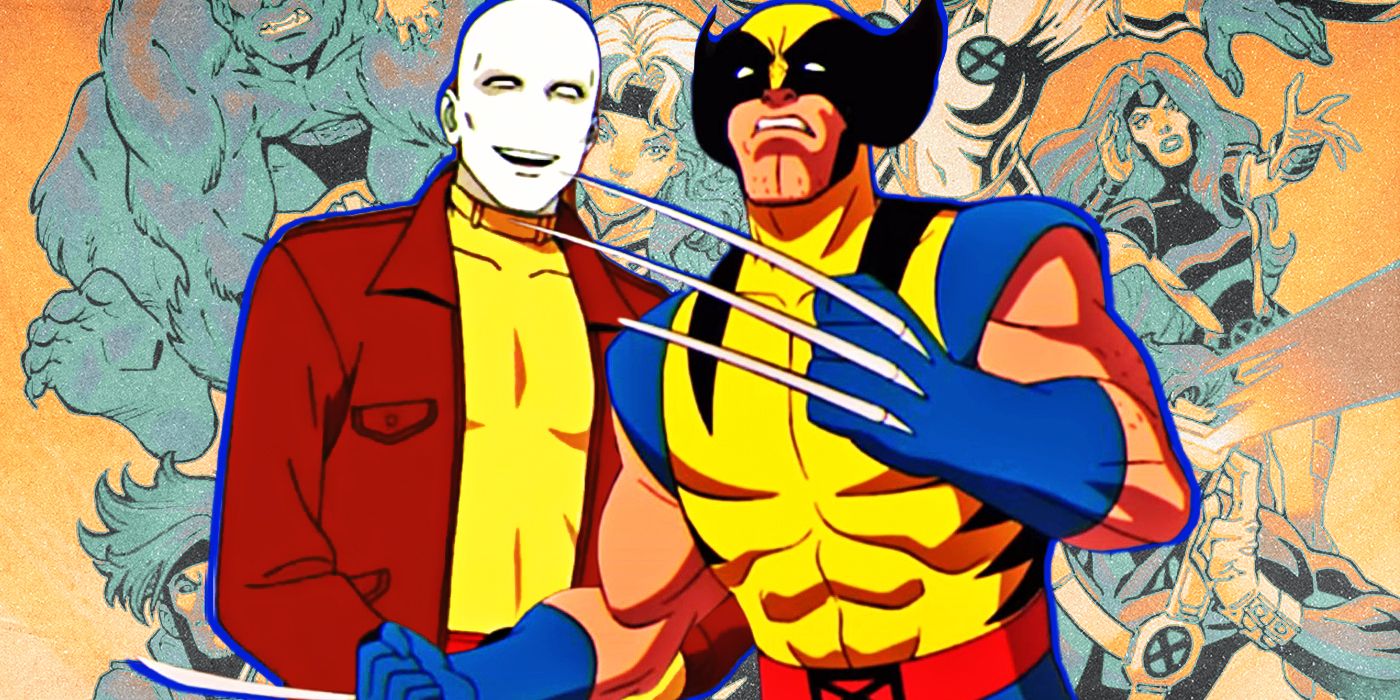
- One of X-Men’s most important bonds is the friendship between Wolverine and Morph.
- While X-Men: The Animated Series touched upon Wolverine and Morph’s connection, it was never fully explored.
- X-Men ’97 makes a point of showing how close the two mutants are and hints at Morph’s true feelings for Wolverine.
The following contains spoilers for X-Men ’97, Season 1, Episode 3, “Fire Made Flesh,” now streaming on Disney+.
X-Men ’97 has been surprising fans of the original X-Men with its return to the world of the classic animated series. The Disney+ X-Men revival has stayed largely faithful to the original, remaining true to its mission statement of delivering a direct continuation of the series Marvel fans fell in love with in the 1990s. However, a new series has also afforded the new creative team opportunities to explore character dynamics that were less developed in the original, further fleshing out the series’ band of mutants. This includes the series’ unlikely friendship between the standoffish Wolverine and the mischievous Morph.
One thing that made X-Men stand out from other animated series at the time of its original run was its focus on the human drama between characters, as well as its depictions of superhero action. X-Men did not shy away from complex relationships, such as the love triangle that emerged between Jean Grey, Cyclops and Wolverine, or the fractured friendship between Professor X and Magneto. The friendship between Wolverine and Morph was one of the series’ more wholesome character relationships, though Morph’s complicated role in the series and Wolverine’s gruff nature often meant this friendship was somewhat sidelined.
How X-Men: The Animated Series Developed Morph and Wolverine


Related
X-Men Fans Need to Watch This Underrated Animated Series on Disney+
Anyone who loves X-Men ’97 and wants more from the X-Men: The Animated Series revival can find additional content in another beloved X-Men cartoon.
Morph was introduced as a semi-original character in X-Men: The Animated Seies. Although he was based on a mutant called Changeling from Marvel’s comic book continuity, the animated series turned Morph into a regular member of the X-Men and eventually gave him a far larger role than Changeling had had in the comics. In the source material, Changeling was chosen for the X-Men’s roster, and had sacrificed himself to save the X-Men. In the animated series, Morph gave his life to save Wolverine from a Sentinel’s attack.
Morph’s death occurred early on in the second episode of X-Men Season 1, and provoked a strong reaction in Wolverine. Killing off a leading hero would have been a bold move for any children’s animated series at the time, let alone a series as notoriously censored as X-Men. To keep the show appropriate for all ages, Morph’s death had to happen just off-screen. However, in many regards, this played to the series’ advantage. Not only did it leave the door open for Morph to return later, but it meant that the impact of his death had to come through the other characters’ reactions. This led to Wolverine’s emotional response, demonstrating the strength of his friendship with Morph, whom he solemnly swore to avenge.

Related
X-Men ’97 Can Redeem the Fox Universe’s Most Mishandled Mutant Villain
After X-Men: Apocalypse failed to do justice by the iconic villain, X-Men ’97 offers many routes to redeem the character for modern audiences.
In Season 2, it was revealed Morph had been saved by Mister Sinister, who kept Morph alive in order to place him under his own control. Brainwashed, Morph returned in a state of internal conflict, compelled to kill the X-Men without understanding why. Wolverine tried to help his friend so that he could return to the team, but Morph insisted on remaining alone until he had overcome Sinister’s brainwashing. Watching Morph flee after their first reunion, Wolverine refused to desert his friend, whom he described as “the only one who could ever make me laugh.”
Morph would return on multiple occasions throughout the second and third seasons of X-Men, always troubled by the effects of Sinister’s brainwashing. It wasn’t until the original series finale that Morph was finally ready to permanently rejoin the X-Men. While these encounters with Morph frequently demonstrated the strength of Wolverine’s feelings for his friend, the fact Morph spent the majority of the series away from his fellow X-Men meant that his interactions with Wolverine were minimal. This was especially true during interactions in which they were not enemies. However, their friendship is an important one, that offers some much-needed support to two tormented souls. X-Men ’97 has finally been able to give more attention to Wolverine and Morph’s camaraderie.
X-Men ’97 Finally Showcases Morph’s Friendship With Wolverine
Related
X-Men ’97 Gives Storm Her Most Important Arc Yet
Disney+’s X-Men ’97 just dealt Storm a major blow but it could help make her a new hero and wise counsel for both humans and mutants alike.
Over the first three episodes of X-Men ’97, while Wolverine and Morph have shared relatively few scenes, it has already become apparent that they are particularly close. Morph is now a regular member of the X-Men once again, following his return to the team in the wake of the attack on Professor X at the end of the original series. Morph has also been somewhat re-imagined for X-Men ’97. His “default” form now more closely resembles Changeling’s comic book appearance, with a featureless bald head, blank white eyes and no nose. It has also been confirmed that Morph is non-binary, though to keep the series rooted in mainstream ’90s parlance, the term “non-binary” is not used and Morph continues to use he/him pronouns.
One of the earliest interactions between Wolverine and Morph in X-Men ’97 proves that Wolverine considers Morph a close confidant, and perhaps, a vital friend in a team of mutants with whom Wolverine often struggles to connect. The scene takes place in the revived series’ first episode, when Wolverine, Morph, Rogue, Gambit and Jubilee arrive at a nightclub, where they are looking for the young mutant Roberto Da Costa, aka Sunspot. While here, Morph banters playfully with Wolverine about the latter’s obvious attraction to Jean Grey, who is now having Cyclops’ child. At this point, Wolverine confides in Morph that he has realized Cylcops and Jean are planning to leave the X-Men.

Related
X-Men ’97 EP Hints at Crossover Cameos From Marvel’s Other 90s Shows
X-Men ‘97’s executive producer shares promising plans and potential crossovers with other Marvel cartoon shows from the 1990s.
A later scene in Episode 3, “Fire Made Flesh,” sees Wolverine, Morph and Gambit coming out of a Danger Room training session together. Morph points out Rogue (who is now in a relationship with Gambit) has a lot of training sessions booked in with the team’s new leader, Magneto. When Morph succeeds in making Gambit nervous about how close Rogue and Magneto are becoming, Wolverine shares a hearty laugh with his friend, finally proving his claim from the original series that Morph is the only one who can make Wolverine laugh. However, when Wolverine leaves to find Jean, Morph’s face falls as he laments being left alone. This suggests his bond with Wolverine is about more than friendship in Morph’s mind.
The scene that follows Morph’s brief interaction with Wolverine sees the X-Men falling victim to visions caused by the Goblin Queen, a sinister clone of Jean Grey. In his vision, Morph catches a glimpse of Wolverine in the shower and appears to like what he sees. He makes a joke of the situation, but goes to join Wolverine in the shower. The twisted apparition of Wolverine then makes reference to Morph’s joking, saying “As if I don’t know. As if we all don’t know.” It’s possible the projection of Wolverine was referring to Morph’s lingering trauma from Mister Sinister, who then appears in the vision. However, it’s equally possible the vision was taunting Morph about his barely concealed romantic feelings for Wolverine.
What Does the Future Hold for Morph and Wolverine?


Related
X-Men ’97’s Most Dangerous Weapon, Explained
The premiere of X-Men ’97 has revealed a dangerous new weapon that could tip the scales as mutants struggle for their own space with humanity.
Given Episode 3’s hint of Morph’s true feelings for Wolverine, it seems that X-Men ’97 may continue to explore the bond between these two X-Men. Although Wolverine’s previous love interests in the animated series (namely Jean Grey, Silver Fox and, in an alternate timeline, Storm) suggest he will continue to be portrayed as straight, X-Men ’97 could explore Morph’s unrequited love for his teammate. An LGBTQ+ romance of this nature is the sort of subject matter censors would have prevented from featuring in the original 1990s X-Men series, despite the fact that Marvel’s X-Men have always served as a metaphor for marginalized groups. X-Men ’97 now has the opportunity to update the original series in a way that further highlights the stories the X-Men were created to champion.
Whether or not X-Men ’97 explores an unrequited love story between Morph and Wolverine, there is value in developing the friendship between these two X-Men. Not only did the original series make a point of establishing how close Wolverine and Morph were, but this connection is an important one in shaping these characters. Wolverine rarely gets along with his fellow X-Men, most famously bearing grudges towards Cyclops and Gambit. In Morph, he finds a friend he can trust more freely and around whom he can relax, catching a break from the punishing life of a superhero. Similarly, Wolverine provides support for Morph in the wake of all he has endured at the hand of Mister Sinister. His friendship with Wolverine reminds Morph that he is not alone.
New episodes of X-Men ’97 debut every Wednesday on Disney+.

X-Men ’97
X-Men ’97 is a continuation of X-Men: The Animated Series (1992).