
The junior analyst at the centre of the Southampton Spygate storm told how he feared losing his job after being put under pressure by head coach Tonda Eckert to film opposition training.
In damning revelations from the written reasons into the club’s failed appeal against their expulsion from the Championship play-offs, the extent of the spying operation and the involvement of Eckert is exposed.
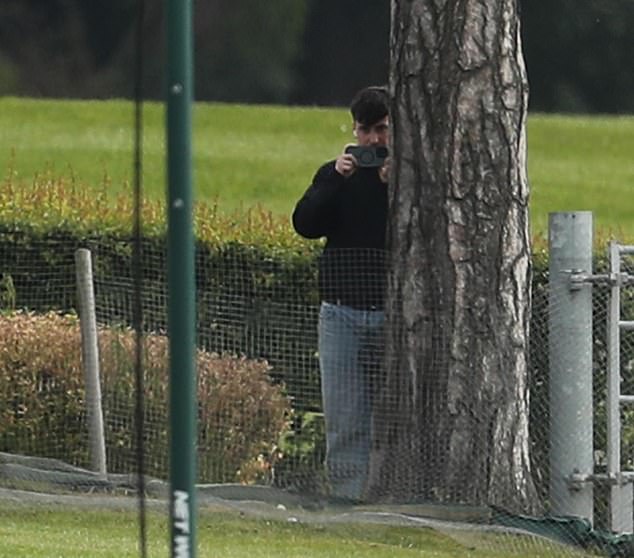
So, too, is Southampton’s attempts to cover up their cheating after Daily Mail Sport broke the story of intern William Salt being caught recording Middlesbrough’s training session from behind a tree ahead of their play-off semi-final.
WhatsApp messages obtained during the subsequent EFL investigation reveal how Salt was told, ‘You legend. Manager loved it’ after a spying mission on Oxford United in December.
However, both Salt and another analyst had reservations about carrying out the instructions. In evidence to the independent disciplinary commission, Salt said: ‘I didn’t really have an option and wasn’t provided an opportunity to say no. I was an intern and was doing what I was told.’

A Southampton analyst hiding behind a tree to spy on Middlesbrough’s training session

Reflecting on how the whole incident played out, the intern told the independent disciplinary commission in his evidence: ‘I didn’t really have an option and wasn’t provided an opportunity to say no. I was an intern and was doing what I was told.’
The appeal panel noted: ‘There was evidence from the intern and (another analyst) that an analyst had lost his job earlier in the season, and there was a concern that they might lose theirs too. They felt pressurised to do the observations that Mr Eckert and the senior coaches wished them to do.’
After Salt was caught at Middlesbrough, another analyst sent him a WhatsApp and said: ‘I said all along I was never happy about it all & it wasn’t right but no one listened to me!”
The full report details the staggering practice of Southampton’s spying, which the panel states was ‘a contrived and determined plan from the top down’.
Regarding the Oxford incident, the report says Eckert wanted to know whether their opponents’ caretaker boss Craig Short would play with a back four or back five in their Boxing Day clash and if Cameron Brannagan was fit to play, which resulted in Salt being asked to watch Saints’ opponents train.
The Middlesbrough incident records how Salt felt ‘under extreme pressure due to the importance of the game for the club’ after Eckert proposed spying on their session.
The report notes: ‘He felt bound to take videos on his phone because (as he said in a message to another analyst after he was caught), he felt pressurised by the coaches: “With them all telling me they want more out of it than what I got at Oxford as got it wrong etc they clearly don’t think my word is good enough so wallop there’s your footage”.’
The analyst even suggested to Salt that he should not go to Middlesbrough and simply report back that the security was too tight and that ‘Eckert would be none the wiser’.
But the club booked flights and two nights in a hotel for Salt and he was shown drone footage of where he could stand to observe training. He was told that Eckert was unhappy that he had not travelled up 24 hours earlier to observe an extra day of training.

Southampton were expelled from the Championship play-offs and given a points deduction too
It was then, on Thursday May 7, that the intern was confronted by Middlesbrough staff and fled the area. Salt was on a train back to Southampton when Daily Mail Sport exclusively revealed that he had been caught ‘spying’, as the commission recorded. Even so, Eckert was still presented by another analyst with a breakdown of Boro’s potential tactics from Salt’s videos.
Attempts to cover up the spying then began and Salt removed his picture from LinkedIn. It was also suggested internally that the media team should remove his presence on Manager of the Month pictures with Eckert. However, Daily Mail Sport had already obtained these pictures and later revealed the strong links between the intern and the manager.
On May 8, chief executive Phil Parsons ‘misled’ the investigation by claiming that footage was not ‘captured, transmitted, shared or analysed’. Parsons also said that the intern ‘was not instructed by any members of senior club staff’. The arbitration panel were ‘unimpressed’ with much of Southampton’s evidence and claims. They upheld the decision to expel the club from the play-off final, where Middlesbrough were then beaten by Hull City.
Meanwhile, National League Eastleigh could now face FA action after the report revealed they supplied Southampton with footage of Ipswich Town training at their facilities on April 28. Salt refused to be sent on the Ipwich spying mission but another analyst did go, after he was supplied with an Eastleigh kit and a ‘legend’ of what his back-story was if challenged. Sources expect Eastleigh to be investigated by the FA.
Southampton responded on Monday with a statement questioning the ‘apparent historic and indirect connections of two panel members to Middlesbrough.’

A series of WhatsApp messages have implicated Southampton boss Tonda Eckert (centre)
David Winnie, a footballer turned solicitor, made one appearance for Boro 33 years ago, while sports legal expert Lydia Banerjee works for Littleton Chambers, who were once used by Middlesbrough in a case concerning former manager Garry Monk.
However, it is understood Southampton did not object to their presence on the commission panel before it took place.
The club statement also said: ‘The club accepts that aspects of our initial response to the situation were not treated with the level of scrutiny they required at the time. In hindsight, we wish this had been managed differently from the outset and this represented an error of judgement for which we take responsibility.’
However, they added: ‘The club is concerned by the weight placed on assertions that junior staff were pressurised into involvement, when some of the most serious allegations appear not to have been supported by direct evidence. That said, junior employees should never have been placed in a position where they felt under pressure, and the club accepts responsibility for that failure of leadership and oversight.’
They concluded: ‘Southampton Football Club will now reflect carefully on the published reasons, review its internal processes and ensure that governance, oversight and decision-making procedures are strengthened as a result.
‘Our responsibility now is to acknowledge what has happened, take ownership of the lessons it brings, and use this experience to strengthen our judgement, discipline, and integrity moving forward together as a club.’