Closing the glass door of my office, I told my assistant to sit down. She had just made a mess of my weekend away and I was about to let her have it with both barrels.
I’d asked her to find a boutique hotel for my 30th birthday, specifying a cosy place near a Michelin-starred restaurant with a four-poster bed.
What she found would have given Fawlty Towers a run for its money in terms of facilities and service. My then-husband and I did laugh about it – eventually – but at the time I decided it simply wasn’t good enough.
So poor Maggie (not her real name) sat there while I delivered a character assassination. I told her how badly she had let me down, how disappointed I was, and how she should have known better.
Her eyes filled with tears. Did I feel sorry for her? No.
The fact that arranging my personal life was not strictly speaking part of her job description was neither here nor there.
I’d just turned 30 and was head of entertainment at Sky One. How on earth had I let myself become such a monster?
If you’d met me in a restaurant back then, you’d have found me charm personified. Yet put me in a corner office, with a fancy job title and a PA, and I was basically Cruella de Vil with a million-pound commissioning budget.

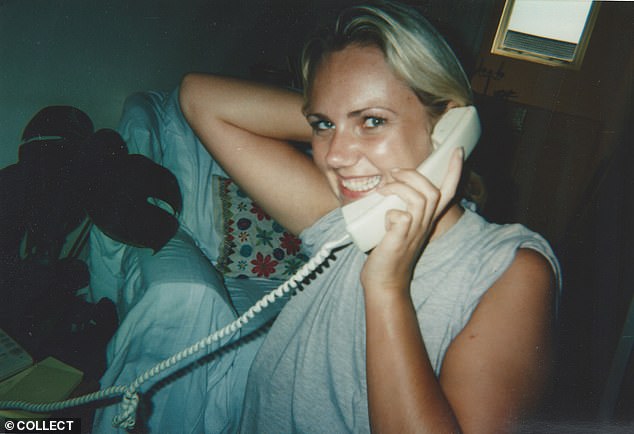
Samantha Brick describes her 30-year-old TV executive self as ‘Cruella de Vil with a million-pound commissioning budget’

After nearly two decades of working in TV, she became a journalist, writing for publications such as MSN, Perth Now and the Daily Mail
I pondered this ugly truth after reading reports of broadcaster Kaye Adams, 63, taking issue with her treatment by the BBC. Sacked by her female boss at BBC Radio Scotland earlier this year over allegations of bullying, the former Loose Woman anchor reportedly thinks she’s the ‘victim of a witch hunt’ and is considering legal action.
Newsnight host Victoria Derbyshire, 57, has also reportedly been the subject of complaints at the BBC, although allegations of bullying – which she strenuously denies – were not upheld.
Obviously, I don’t know what happened in either case, and I’m not suggesting they behaved as I did. But I do know this: woman-on-woman bullying when all three of us were starting our careers in broadcasting was a big problem. I know this because, with shame, it’s behaviour I recognise in myself.
I won’t defend bullying but I understand how women’s egos can run riot in an industry that rewards toughness, self-importance and an almost deranged willingness to work around the clock.
When I started as a researcher in current affairs at LWT in 1993, there were only a handful of female producers around me. Fresh out of university, I was young, working-class and ambitious. I naively imagined senior women might show me the ropes, but no, there was no sisterhood and no wise woman mentor.
On the contrary, the atmosphere among the women felt positively chilly. One female producer was so utterly disorganised she would routinely insist her team stayed until 9pm or 10pm. After one late night, I was flashed at on the walk to Waterloo Station. Requests to leave at a more normal, and safer, time fell on deaf ears.
Then there were the women only a few years older than me. They saw me – and, eventually, I saw them – as competition, there to be undermined and back-stabbed.
If you wanted to survive the world of television, you learned fast: swallowed the discomfort, forgot the (at times) atrocious behaviour of other women and refused to kick up a fuss.

Sacked by her female boss at BBC Radio Scotland earlier this year over allegations of bullying, Kaye Adams reportedly thinks she’s the ‘victim of a witch hunt’ and is considering legal action

Newsnight host Victoria Derbyshire, 57, has also reportedly been the subject of complaints at the BBC, although allegations of bullying – which she strenuously denies – were not upheld

Woman-on-woman bullying when all three of us were starting our careers in broadcasting was a big problem. I know this because, with shame, it’s behaviour I recognise in myself, writes Samantha Brick (picture posed by models)
One senior female boss sent another young woman and me to work in the middle of nowhere with much older male colleagues – with no locks on the bedroom or bathroom doors – and couldn’t see why we didn’t like the idea.
I stood my ground and refused. My colleague took the company to an industrial tribunal for sexual harassment, an act of professional suicide. The case was settled before it got to court but she never worked in TV again.
For me, it was lesson learned. It was the last time I complained. Later, another female boss withdrew a flexible working arrangement that allowed me to leave early on Fridays. Bear in mind, I was at my desk by 8am, rarely left before 8pm and took transatlantic calls at all hours. The arrangement had never been a problem. She removed it, as far as I could see, simply because she could.
Shouting, rudeness, high standards and impossible hours showed you were truly committed. Tears in the loo? Weakness.
At 29, I was offered a role as a commissioning editor at Sky. That is where I really honed my management style. Or, more accurately, where I learned how to be the kind of boss everyone feared.
I left late-night answerphone messages for assistants, telling them what needed doing as soon as they arrived in the morning.
I expected underlings to read my mind. I infuriated my development teams by confusing urgency with importance. I postponed meetings last minute with no consideration for others.
I had spent my 20s being bullied and now I was doing the same.

Shouting, rudeness, high standards and impossible hours showed you were truly committed. Tears in the loo? Weakness (picture posed by models)
The higher I climbed, the more vicious the atmosphere became. It’s all very well to encourage women to ‘lean in’ at work, but the reality was less corporate sisterhood and more like a cage fight.
In my 30s, I became a director of programming for a large production company. There, I found more competition, more ego and more women yanking the ladder up behind them, using it to whack the next woman on the head.
One senior female boss discussed my six-figure salary with colleagues behind my back, questioning whether I was worth it.
By then I was hiring women myself. My critique of their shortcomings was typically delivered with a smile and dressed up as concern. ‘I’m not angry, I’m just surprised you thought this was good enough,’ was a well-used phrase.
I’m sure I even barked: ‘I need solutions, not emotions!’ to one poor woman on the brink of tears.
I told myself television was brutal, and if people could not cope they were in the wrong industry.
I thought I was being exacting, but now I can see it often made me unkind.
No one ever made a formal complaint about me, as far as I know. But that doesn’t let me off the hook. I saw emails shared among employees calling me all sorts. At the time I was furious. Looking back now, with more wisdom and less ego, I wonder whether some of them had a point.
Television amplified the worst parts of my psyche. It took my ambition, perfectionism and insecurity, then rewarded the bits that should have been softened, not sharpened.
And, yes, women in authority are judged more harshly than men. I saw men behave appallingly and be written off as ‘a bit old school’. A woman raising her voice was much more likely to be called difficult, emotional or a bitch.
That double standard is real. But being judged unfairly does not give any woman permission to treat staff badly. High standards are no excuse for humiliation.
Don’t get me wrong: television is clever, fast and full of brilliant women, but it can also be a pressure cooker where bad behaviour is excused because somebody delivers ratings, brings in commissions or generates headlines.
As for my assistant? I can see now that she never respected me, she feared me. If I met her today, I’d apologise.
Women of my generation were taught the route to success was through resilience, perfectionism and impossibly high standards. But I know these traits also made me very difficult to work for.
I don’t know whether Kaye Adams will recognise any of this. I only know that, looking back, lots of women will.