
Warning! This post contains SPOILERS for Spider-Noir episodes 1-8
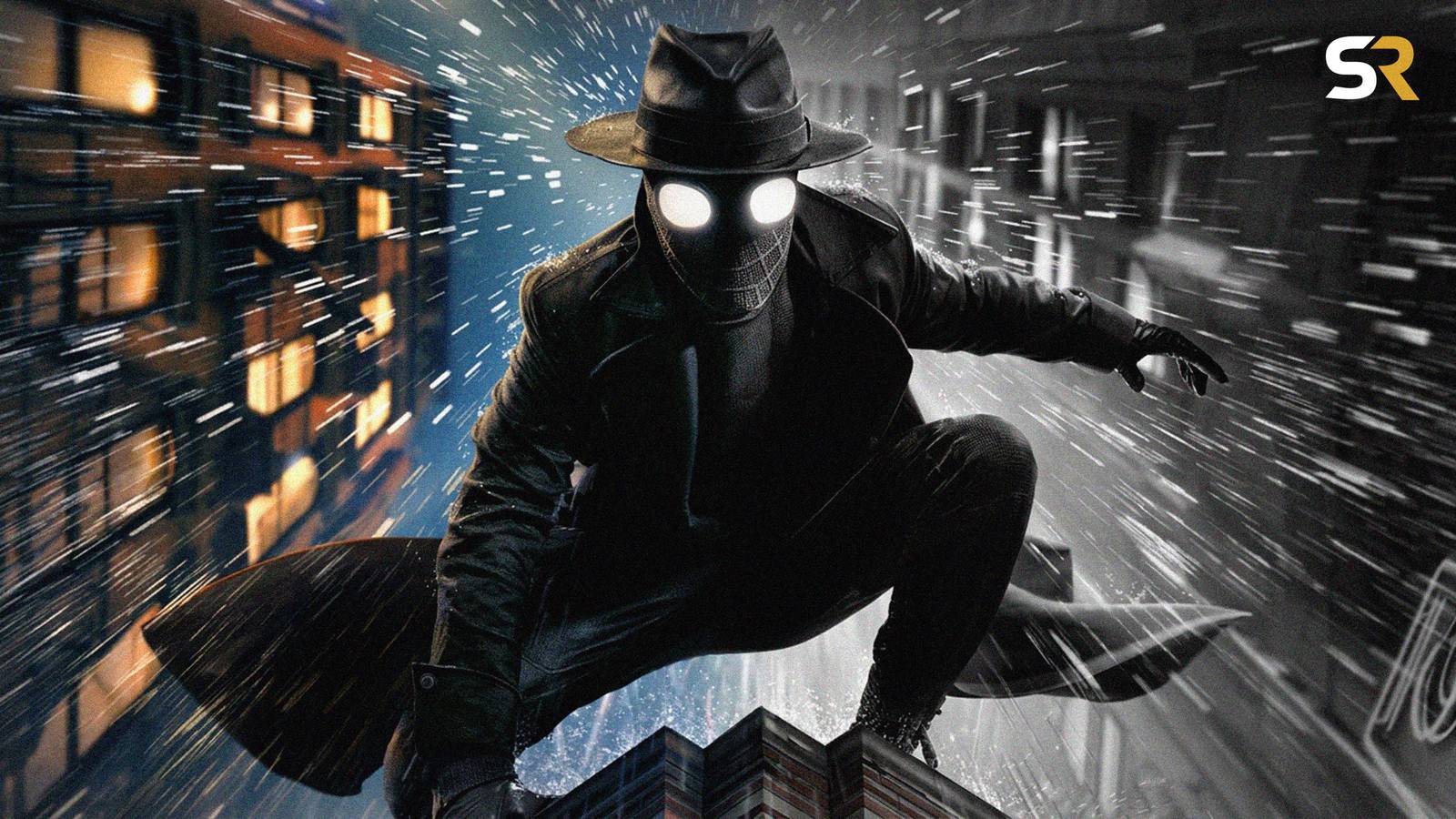
Amazon’s new Spider-Noir series features a pretty cool collection of Easter eggs and references. Set in a version of 1930s New York, Spider-Noir sees Nicolas Cage playing the classic private detective variant of Spider-Man in live-action after voicing the black-and-white Webslinger in the animated Spider-Verse movies.
While some of Spider-Noir’s Easter eggs are more obvious, others are some fast references featured in the background, as well as quick lines of dialogue that are really cool as well, making Spider-Noir feel like a perfect love letter and homage to the Spider-Man franchise as a whole, even while re-imagining so much of the lore for this unique 1930s era.
Not only are there references to the original Spider-Man Noir comics, but there are also some loose connections to the animated Spider-Verse movies and even to past Spider-Man films starring Tobey Maguire, Andrew Garfield, and Tom Holland. The new series also pulls from Marvel’s broader comic history as well, reinventing several characters like Silvermane, Tombstone, Sandman, Black Cat, and more. To that end, here are the 25 biggest of the biggest Easter eggs, Marvel references, and more cool nods we found in Sony and Amazon’s new Spider-Noir series.
The Biggest And Best Easter Eggs & Marvel References in Spider-Noir

“The Only Universe I Know Of” — Spider-Noir’s first episode opens with narration from Ben Reilly himself while he’s webslinging (which is very Tobey Maguire Spider-Man). During this sequence, it’s confirmed that this Spider-Man Noir variant is not the same as Nicolas Cage’s animated Noir seen in the Spider-Verse movies:
“Someone once asked me what universe this was. A strange question that stuck with me all these years later. All I could say for sure was it was the only one I knew of. And that was as true then as it is now.”
“With No Power Comes No Responsibility” — Rather than getting the classic Spider-Man motto from Uncle Ben, we instead get “With No Power, Comes No Responsibility”, embodying Ben Reilly’s entire jaded perspective and five-year retirement from being The Spider after he lost the love of his life.
Daily Bugle — Spider-Noir reveals that the Daily Bugle exists in this universe, with Lamorne Morris’ Robbie Robertson having once worked there when he covered the exploits of The Spider before his retirement.
Ben Reilly — The name Ben Reilly itself should be familiar to longtime comics fans, as it was originally the name of Peter Parker’s clone from the Clone Saga who eventually became the Scarlet Spider. Likewise, it’s eventually revealed that “Ben Reilly” is an alias The Spider took on after he got his powers and returned home from the war, suggesting that his real name might be Peter Parker, as it is in the original comics. (even if it isn’t said aloud in the new Spider-Noir series)
The Spider & Guns — Cage’s The Spider briefly uses a pistol at one point in the new Amazon series, connecting to the Spider-Man Noir of the original comics, who’s notably one of the only Spider variants willing to use firearms and lethal force when necessary.
Ben Reilly, Ace Photographer — Ben Reilly’s past as a photographer is referenced, and it’s said that “he was always in the right place to snap a pic of The Spider“, connecting to Peter Parker’s first job taking pictures of Spider-Man for the Daily Bugle in the main Marvel Universe.
Silvermane — While Silvermane’s name in the original comics is Silvio Manfredi, who’s connected to the Italian Mafia and the group known as the Maggia, Spider-Noir’s version is named Finbar Byrne, who runs the Silvermane Gang in New York, running the entire city’s organized crime, influencing politics, and shipping illegal alcohol into the city during Prohibition.
Robbie Robertson — Robbie Robertson is confirmed to be Ben Reilly’s best friend, connecting to their friendship in the original Spider-Man Noir comics. Likewise, Robbie eventually befriends Lonnie Lincoln’s Tombstone, which connects to their childhood friendship in the original Marvel Universe timeline. By Spider-Noir’s ending, Robbie leaves the Daily Bugle despite getting his job back to run The Harlem Herald, with Harlem being where Robbie grew up on the page as well.
Frankie, Junior Detective — One of Ben Reilly’s most helpful allies is a street kid named Frankie, tied to the original Spider-Man Noir comics, where the 1930s Spider-variant indeed relies on kids on the street as key informants.
Boris Karloff’s Frankenstein — At one point, Ben Reilly references Boris Karloff’s Frankenstein, which was released in 1931, making it a fitting film to reference considering the era.
The Orpheum Theater — An Orpheum theater can be seen in the background of several shots. Founded in 1886, The Orpheum Circuit was a chain of vaudeville and movie theaters that operated across the country through 1927 where it was eventually integrated into the Radio-Keith-Orpheum (RKO) corporation. RKO is responsible for producing historic films including Citizen Kane, It’s A Wonderful Life, and King Kong.
Organic Webs — Not only do “The Spider’s” organic webs connect to the Spider-Man Noir of the comics, but also to Tobey Maguire’s Spider-Man (and soon Tom Holland’s in Spider-Man: Brand New Day, releasing later this year).
1936’s Great Guy — Ben Reilly is shown watching the 1936 crime-comedy movie Great Guy, reciting all the lines by heart. This connects to the reveal where Ben reveals that movies helped him learn how to be a human again after he was bitten by the soldier-soldier hybrid mutate that gave him his powers.
1933’s Below The Sea — Movie posters for 1933’s Below The Sea are featured in select background shots, a classic movie starring Ralph Bellamy and Fay Wray.
Catching Cat Hardy — When Cat Hardy intentionally falls out of a window to confirm her suspicions that Ben Reilly is the Spider, he shoots two web lines to catch her rather than one (a fatal mistake on the part of Peter Parker’s Spider-Man that led to Gwen Stacy’s death in the main Marvel Universe timeline).
“More Spider Than Man” — Ben Reilly reveals that he had to learn how to become human again after he was bitten, as he initially became more Spider than Man at the onset before he learned how to suppress his spider impulses. It’s absolutely fascinating, while also sharing parallels with “The Other” storyline, where the primary universe Peter Parker struggles with the same challenge following a major evolution of his powers.
“Failed Super Soldier Program” — The Germans’ various experiments on POWs to give them superpowers are referred to as a “failed Super Soldier program.” When it comes to Super Soldier programs in any Marvel Universe, successful versions usually involve Captain America.
On Quiet On The Western Front — An unhelpful nurse is shown reading All Quiet on the Western Front, which was first published in 1928. Hilariously, Robbie spoils the ending of the book.
Megawatt’s Acting Aspirations — Megawatt constantly reciting lines from various movies and plays connects to the original version of the Marvel villain, who was indeed an actor before gaining his powers.
Spider-Noir No More? — When Ben Reilly thought that he and Cat Hardy were going to leave New York together, he planned to leave his vigilante life and mask behind, a concept that very much evokes the classic “Spider-Man No More” storyline from the original comics.
The Spider’s Blood — The Spider’s blood is initially believed to be central to a cure for the superpowered POWs who are gradually dying from the very thing that gave them power. This is not unlike in The Amazing Spider-Man 2, where Harry Osborn was confident that Spider-Man’s blood could cure his own terminal disease. That said, the basis for a cure was ultimately revealed to be in Ben Reilly’s liver rather than his blood.
1933’s King Kong — King Kong is referenced by Dr. Faber, a very timely reference considering the first King Kong movie was released in 1933.
The Spider’s Nightmare — While sedated by Dr. Faber, Ben Reilly has a nightmare that he’s been shrunken down to the size of an actual spider, bringing to mind a similar nightmare had by Peter Parker in The Amazing Spider-Man animated series.
The Spider’s Ripped Mask — During the final battle with Megawatt and Sandman, half of The Spider’s mask is ripped, showing his true face beneath, an absolutely classic look for any version of Spider-Man during their most intense conflicts.
“In A Different World… ” — Choosing to leave New York with Flint Marko’s Sandman by Spider-Noir’s ending, Cat Hardy does tell Ben Reilly that in a different world, she would have run away with him instead. This is a reference to the primary Marvel Universe timeline, where Felicia Hardy’s Black Cat and Spider-Man do indeed have an on-and-off again romance in the comics.
All episodes of Spider-Noir are now streaming on MGM+ and Prime Video.

- Release Date
-
May 27, 2026
- Network
-
MGM+
- Showrunner
-
Oren Uziel, Steve Lightfoot
- Directors
-
Harry Bradbeer
-
-

Lamorne Morris
Robbie Robertson