
By this point, we all know the story of the wolfman. A modern guy, living in the modern world, unlocks the inner beast, revealing the monster that was always inside of him. That theme drives not just 1941’s The Wolf Man, the most popular early werewolf movie, but also 1935’s Werewolf of London, as well as most modern movies about the monster, up through the recent (and underrated!) reimagining, Wolf Man.
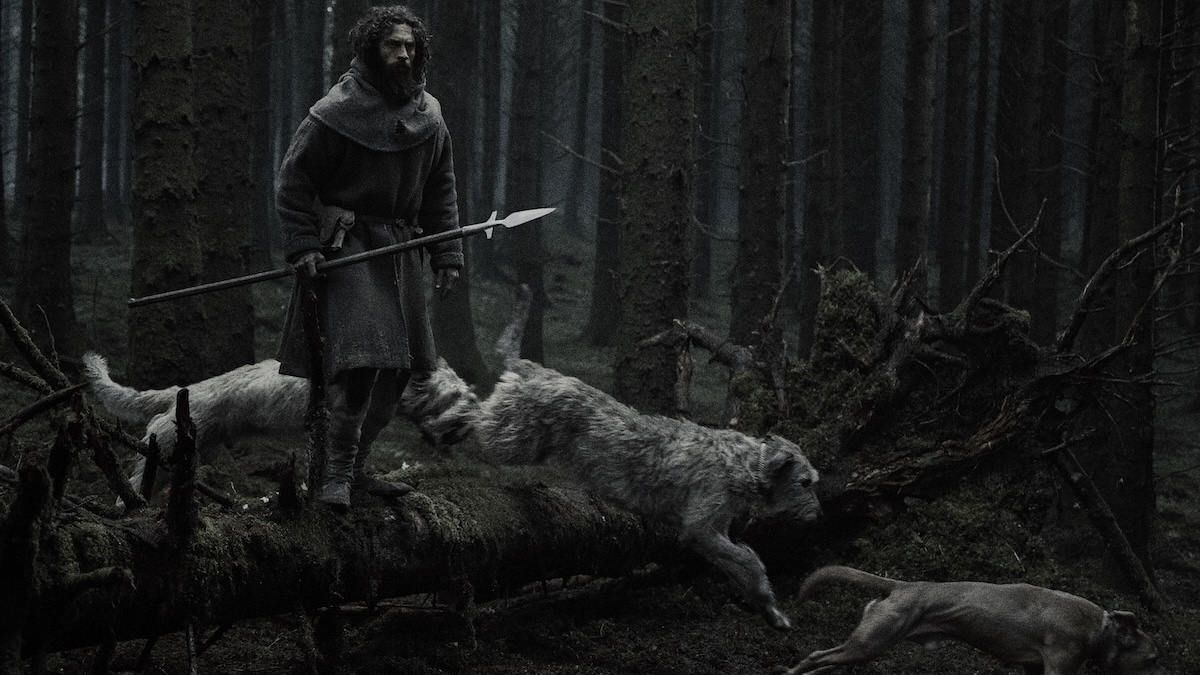
But director Robert Eggers has no interest in the modern world, as demonstrated by his films The Witch and Nosferatu. So it’s no surprise that the first trailer for Werwulf features no doctors or scientists offering rational explanations for the strange behavior of a heretofore average person. Instead, the trailer is all foggy marshes and overgrown forests, through which Aaron Taylor-Johnson‘s dirt-caked (but still properly ripped) farmer walks. The visuals match the film’s setting in 13th century England, allowing Eggers to find horror in the era’s tensions between paganism and Christianity.
Fittingly, the trailer begins with a shot of a full moon, before showing Taylor-Johnson’s character as a young man, beckoned into a cave by an older monk of some sort. From there, we get largely sharp cuts of scenes from the present, matched by menacing dialogue from a hunter, played with relish by Willem Dafoe. We also see images of the farmer’s wife, played by Lily-Rose Depp, praying for the salvation of her cursed husband. In the final moments, the trailer gestures toward a transformation, as a wild-eyed Taylor-Johnson starts foaming at the mouth.
“Don’t dread the darkness,” intones Dafoe’s hunter. “Embrace it.” One could imagine a similar line being spoken to Larry Talbot, the modern man who original nepo baby Lon Chaney Jr. played in the classic Universal films. In those cases, the line would have tempted Talbot to ignore his pretenses towards modernity and to indulge his id, the untamable quality that civilization cannot control. Owing to the success of 1931’s Frankenstein and Dracula, those films imported the themes of the source novels, which reflected 19th century concerns that humans could not be ruled by reason.