
“You treated Hispanic voters so badly that I warned you it would cost you politically,” MS NOW’s Joe Scarborough declared Wednesday morning, speaking with the intensity of someone who had not been asked to host the network’s prime-time election coverage. “I told you. I warned you this would destroy you politically.”
“For everyone watching from the White House, this is the price of ICE,” he added, offering his own explanation for the Republican midterm losses in Texas, where the party surrendered a Senate seat and the governor’s mansion in one of its bleakest showings in years.
It was a striking message from the same commentator who once assured viewers that the cognitively struggling Joe Biden was “beyond cogent” and “better than he’s ever been, intellectually and analytically.”
That, apparently, is the punishment for losing an election: being told “I warned you” by television personalities who were just as wrong about the previous one.
To be fair, President Donald Trump and several of the Republican candidates he backed gave voters plenty of reasons to reject them. That did not make the triumphal reaction from liberal television commentators any easier to watch as the Democratic wave gathered strength.
Before 6 p.m. Eastern, the president was already firing off angry messages, including one aimed at Fox News host Greg Gutfeld, who was live on air.
“Greg, tell Jessica Tarlov—who is the worst, and I mean worst in capital letters—that gas prices are lower than they were under Biden and Obama, and they allowed Iran to get the nuclear bomb,” Gutfeld read from his phone during The Five.
Trump was also battling the Fox News polling numbers online. At 6:36 p.m., he posted that the network’s survey was “always the worst,” claiming that its questions were designed as “hit jobs” and that every answer was “BULLS**!”

“I warned you,” declared MS NOW’s Joe Scarborough on Wednesday morning, delivering his post-election message with unmistakable intensity

Before 6 p.m. Eastern, the president was already sending angry messages to Fox News host Greg Gutfeld during his live broadcast
It was shaping up to be a long evening.
On CNN, meanwhile, anchor Jake Tapper stumbled early by referring to Trump’s signature tax proposal as “no tax on tits,” apparently mangling the phrase “no tax on tips.”
It may have been an amusing slip, but it did little to inspire confidence in the network’s election-night coverage.
As the first meaningful vote totals arrived, Tapper appeared increasingly energized.
Republican-held seats in traditionally conservative Indiana and Kentucky began trending toward Democrats, and the excitement among the panel became increasingly difficult to conceal.
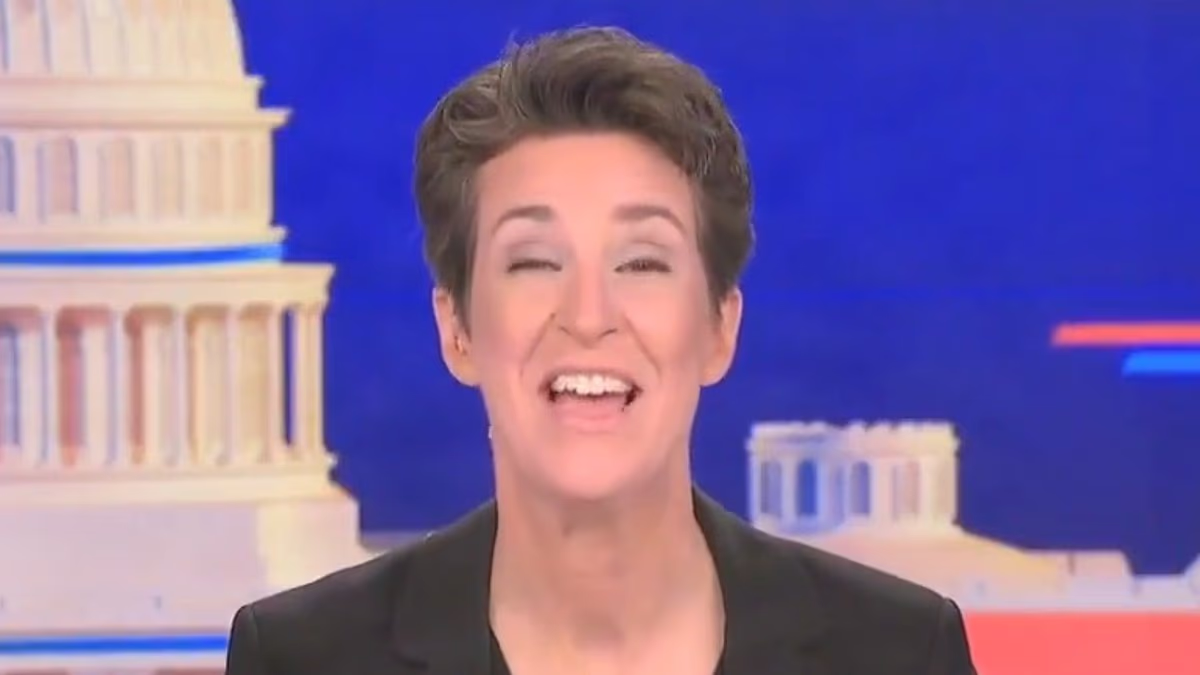
The MS NOW panel, led by Rachel Maddow, was equally animated.
Could American voters really have rejected the Republican coalition that had seemed so powerful? And what would that mean for Maddow’s future as one of the country’s most prominent anti-Trump commentators?
By shortly after 7 p.m., the network’s election-night drama appeared to be entering a decisive new chapter.
Networks called the Georgia Senate race for Jon Ossoff, prompting CNN’s Kasie Hunt to suggest that an Ossoff presidential campaign could effectively begin that night.
From there, Republican setbacks began arriving in quick succession.
At 8:10 p.m., Democrats were projected to win Florida House districts that had been drawn to give Republicans a significant advantage.
Tapper began using the phrase “blue-nami,” his enthusiasm rising as the results continued to move in the Democrats’ direction. Kaitlan Collins’s projected victory was only part of the reason for the excitement.
CHECK THIS OUT: Fox News’ Jacqui Heinrich Shares Emotional Message to Husband Brian Fitzpatrick After He Loses House Seat
Texas Governor Greg Abbott appeared vulnerable. Democrats were leading in numerous Republican-held House districts, Susan Collins was trailing in Maine, Kansas had become competitive, and Republicans were failing to show the strength they needed in key Senate contests.
Back on CNN, Van Jones described the results as a “revenge of voters of color.”
As throughout the campaign, the demographic makeup of the electorate remained central to the network’s election analysis.
At 9 p.m., Republicans received one of the night’s few major pieces of good news.
Former Congressman Byron Donalds was projected to win Florida’s gubernatorial race, succeeding Ron DeSantis and becoming the first elected Black Republican governor in the state’s history. Yet much of the liberal media reaction focused elsewhere rather than on the historic nature of his victory.
MS NOW commentators, including Symone Sanders-Townsend, were instead celebrating Democrat Keisha Lance Bottoms’ projected victory in Georgia.

Rachel Maddow’s MS NOW panel remained intensely focused as the Democratic gains continued throughout the evening
“Symone, your political analysis of this race has been perfect, but how does it feel?” Lawrence O’Donnell asked, pressing her to describe the emotional significance of the result.
Sanders-Townsend dabbed at her eyes with a tissue offered by Maddow before saying she was close to tears.
“After the 2024 presidential election, it felt to me—and to Black women across the country—like a repudiation of us,” she said.
Donalds’ victory in Florida received considerably less attention from the panel.
“As they say in my community, all kinfolk aren’t skinfolk,” Sanders-Townsend said.
The comment underscored the sharp racial lens through which much of the election-night discussion was conducted.
Donalds also became the target of online mischief soon after his victory, when his Wikipedia page was reportedly altered to describe him as the first openly gay governor. His wife, Erika, would presumably dispute that description.
As the results continued to deteriorate for Republicans, the celebratory mood on liberal networks grew even louder.
“I’m happy, happy, happy! I’m so happy!” Jones said, grinning broadly.
He compared the night to Christmas, a birthday, Easter and Halloween before invoking the Jonestown tragedy. “This is Jonestown for the Republican Party,” Jones said. “They drank the Kool-Aid, and their candidates are dropping like flies across the country.”

“I’m happy, happy, happy! I’m so happy!” Van Jones said as the Democratic victories continued to pile up
It was an unusually exuberant performance—even former Obama adviser David Axelrod interrupted to ask what Jones had been drinking.
At 9:30 p.m., Democrat Roy Cooper was projected to win North Carolina’s Senate race. An hour later, Lindsey Graham’s sister was declared the loser in South Carolina. By 10 p.m., control of the House had been called for Democrats, and the shape of the election was clear.
Trump and his allies had suffered a decisive defeat, driven in part by voters’ frustration with a seemingly endless foreign conflict and the continued pressure of high gas prices. Those concerns helped Democrats make gains in areas that had long been considered safely Republican.
What happens next remains uncertain. But if Democrats interpret the result as a mandate for sweeping ideological change, the political mood could look very different two years from now. The celebrations may be replaced by tears—and the election-night television panels may be telling an entirely different story.