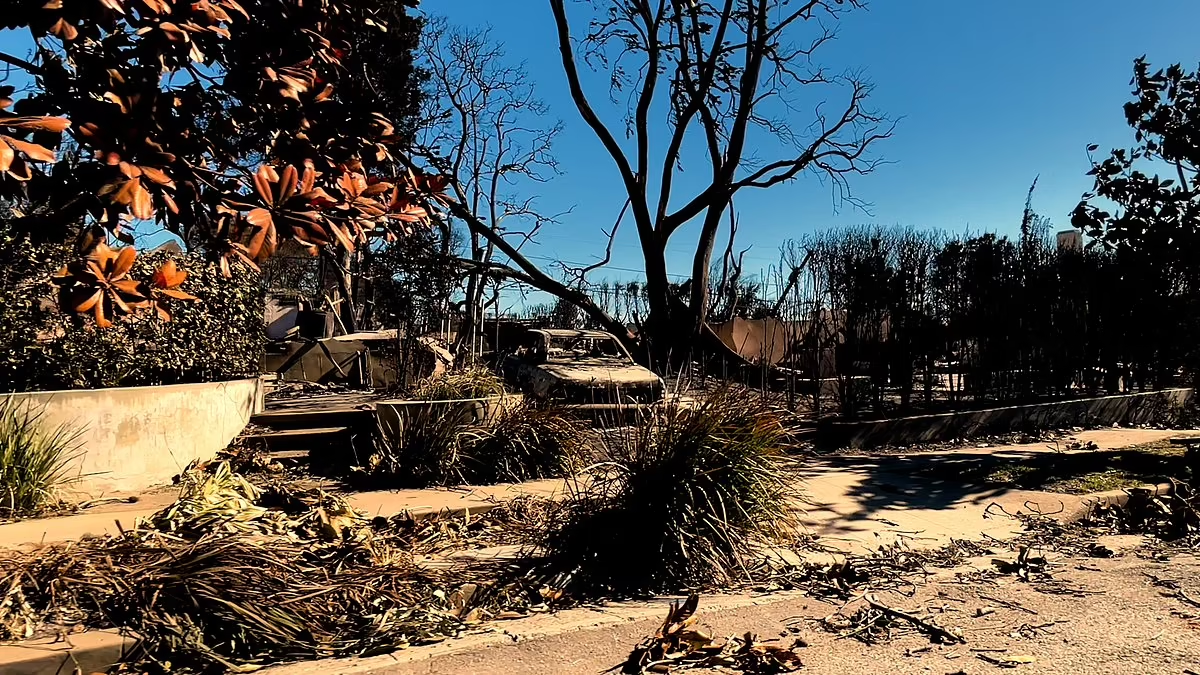


Incredible ground footage captured for DailyMail.com shows the once-glamorous Pacific Palisades enclave reduced to ruins after catastrophic wildfires tore through Los Angeles. The idyllic neighborhood, long known as a celebrity haven, now resembles a smoldering apocalyptic landscape. Hundreds of luxury homes worth millions of dollars have been reduced to rubble and ash, with little remaining of the heirlooms and household possessions that once filled them.

The properties left partially standing offer only faint reminders of their former elegance. Manicured lawns and picturesque homes have been replaced by scenes of devastation, with buildings coated in black soot and surrounded by debris. Trees and shrubs that were once green and thriving have been scorched. The Palisades Fire is the most destructive wildfire in Los Angeles history.

Red Flag warnings for extreme wildfire danger expired across the Los Angeles area late Wednesday, but forecasters said dry, gusty conditions would continue Thursday and that the threat of new fires remained. The National Weather Service warned that the relief for fire-ravaged Los Angeles would be brief, with a strong possibility of renewed Red Flag warnings from Sunday as high winds and low humidity return.

About 6.5 million people remained under a critical fire threat after the blazes burned an area nearly the size of Washington, DC, and claimed at least 25 lives, authorities said. On Wednesday, firefighters battled powerful, dry winds that were driving two massive wildfires across Los Angeles. The blazes had terrorized the city for eight days and tested residents and emergency crews during what officials described as the worst disaster in its history. Residents were urged to stay alert and prepare to evacuate immediately, with peak wind gusts expected to continue through Thursday afternoon.

Winds forecast to reach 70 mph failed to materialize Wednesday, but firefighters still reported gusts of 30 to 40 mph alongside low humidity. The region has received no appreciable rainfall in nine months, keeping the danger high. The fires have damaged or destroyed more than 12,000 homes and other structures and forced up to 200,000 people to flee. As of Wednesday, Los Angeles County Sheriff Robert Luna said 82,400 people were under evacuation orders, while another 90,400 faced evacuation warnings.
KEEP READING: Ohio State Fraternity Suspended Over Hazing Video of Pants on Fire

Entire neighborhoods have been wiped out, leaving behind smoldering ash and debris. In many locations, only chimney stacks remain where homes once stood. Roughly 8,500 firefighters from across the western United States, Canada and Mexico have held the fires’ growth in check for three days. The Palisades Fire on the city’s western edge remained at 23,713 acres, while containment increased slightly to 19 percent, meaning that amount of its perimeter was under control.

The Eaton Fire, burning in the foothills east of Los Angeles, covered 14,117 acres and was 45 percent contained. A separate fire erupted Wednesday in San Bernardino County, east of Los Angeles, consuming 30 acres, according to Cal Fire. Two other Southern California fires were largely under control. As the emergency continued, critics questioned whether Los Angeles had done enough to prepare for the wildfire threat after the National Weather Service issued warnings about dangerous conditions, although firefighters had been placed on alert and resources were available for deployment.

Los Angeles Fire Chief Kristin Crowley faced questions Wednesday about a Los Angeles Times report that officials decided not to keep 1,000 firefighters on duty for a second shift last Tuesday, just as the fires began spiraling out of control. Critics cited by the newspaper argued that the departing shift should have remained in place and that up to 25 additional fire engines should have been positioned in the hills.

Crowley defended her department’s response, saying officials could not have known precisely where fires would ignite and that some firefighters had to remain available for routine emergency calls across the city. “We did everything in our capability to surge where we could,” Crowley said. The Times quoted Deputy Chief Richard Fields, who oversaw staffing and equipment decisions before the fires, as saying scrutiny was welcome but warning that critics were too quick to second-guess decisions with the benefit of hindsight.

Want more breaking news and stories like this from Our News Outlet? Visit our profile page and tap the follow button above to stay up to date.