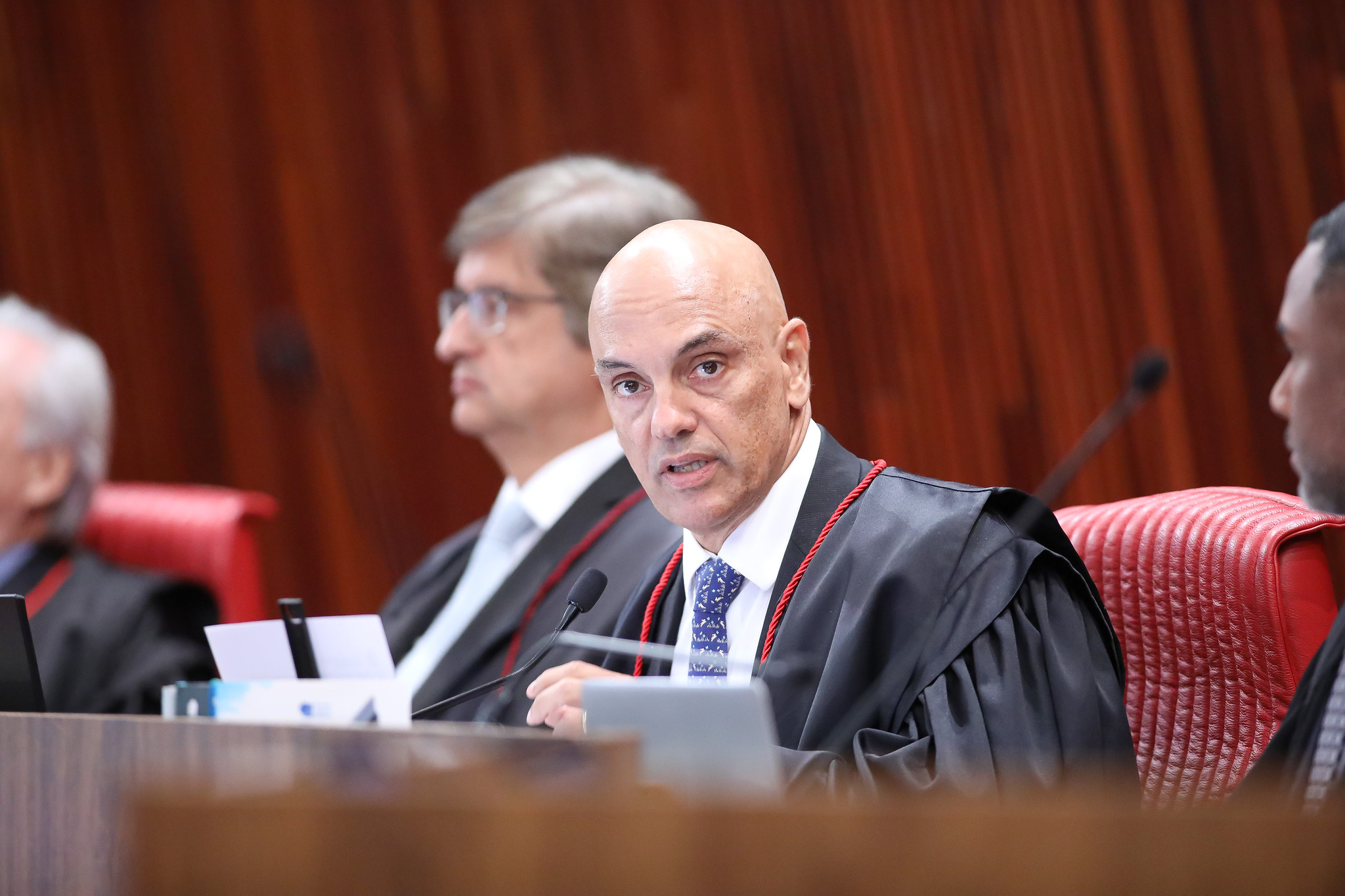

Rumble and Trump Media stood poised last week to score a victory in their lawsuit against Alexandre de Moraes, a justice of Brazil’s Supreme Federal Tribunal who had ordered the American social-media outlet to shutdown the accounts of political opponents. However, on Tuesday, a federal judge in Florida granted Brazil’s request to intervene in the case, with the South American country arguing it was “the real party in interest.” But with the country’s elections set for October, Brazil’s left-wing president Luiz Inácio “Lula” da Silva, might soon regret highlighting the massive censorship scheme launched by Moraes.
In February 2025, Rumble filed suit against Moraes in a Florida federal court, seeking a judgment declaring the Brazilian justice’s orders against the American company are unenforceable in this country. Trump Media, which uses Rumble as its video-streaming and hosting provider, joined the lawsuit, alleging Moraes’ orders against Rumble negatively impacted its business operations.
Among other things, Moraes had issued sealed orders directing Rumble to block the accounts of a popular Brazilian conservative commentator and blogger who fled the South American country and sought political asylum in the United States. Moraes’ order also imposed fines of approximately $9,000 for every day Rumble failed to comply with his directive. The Brazilian justice further directed Rumble to provide him with account holders’ information. When Rumble refused to capitulate, Moraes ordered the complete suspension of the social media company in Brazil and also threatened Rumble’s CEO with criminal prosecution.
Moraes emailed his various orders to Rumble, which is a Florida-based corporation. And so, Rumble filed its lawsuit against Moraes in a federal court in Florida, arguing that the Brazilian justice lacks authority over the American business which has no operations in Brazil. Rumble also argued that Moraes’ universal ban on accounts operating from the United States violates the free speech rights of Americans, and that the order to provide user information violates federal law.
After numerous efforts to serve Moraes proved futile, Rumble obtained permission from the federal court to serve the Brazilian justice via email, which it then did. That prompted Brazil to file a Motion to Intervene, arguing that Moraes was sued in his official capacity as a justice and thus it was really a lawsuit against Brazil. Earlier this week, the court granted that motion, allowing Brazil into the case.
The Court, however, did not rule on Brazil’s simultaneously filed Motion to Dismiss, and here is where things will get interesting: Rumble’s complaint details not merely Moraes’ orders against it, but the extensive censorship efforts undertaken by the justice as part of his so-called “Fake News Inquiry.” That inquiry and the many censorship orders issued by Moraes have overwhelmingly targeted critics of Moraes, the current Brazilian president, or institutions they control.
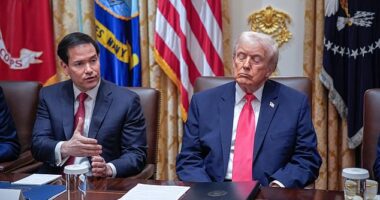
Last year, the State Department responded to those Brazilian censorship activities by sanctioning Moraes and his fellow justices, with Secretary of State Rubio, writing:
President Trump made clear that his administration will hold accountable foreign nationals who are responsible for censorship of protected expression in the United States. Brazilian Supreme Federal Court Justice Alexandre de Moraes’s political witch hunt against Jair Bolsonaro created a persecution and censorship complex so sweeping that it not only violates basic rights of Brazilians, but also extends beyond Brazil’s shores to target Americans.
Bolsonaro, who Rubio had singled-out in his press release, is a conservative who had served as Brazil’s president from 2019 to 2023, and his son, Sen. Flávio Bolsonaro, is currently running against the left-wing incumbent, President Lula.
By intervening in Rumble’s lawsuit against Moraes, Lula has just reupped the newsworthiness of his country’s censorship against his political opponents. And while Moraes may be able to shutter Rumble and extort other social media companies into silencing their political opponents, it won’t be as easy to bury news of Brazil’s appearance in a federal court to defend its autocratic censorship — especially with President Trump’s social media start-up also a plaintiff in the litigation.
Come October, then, we may well see Sen. Bolsonaro joining the growing slate of conservative leaders in Central and South America who have replaced their socialist predecessors.
Margot Cleveland is an investigative journalist and legal analyst and serves as The Federalist’s senior legal correspondent. Margot’s work has been published at The Wall Street Journal, The American Spectator, the New Criterion, National Review Online, Townhall.com, the Daily Signal, USA Today, and the Detroit Free Press.
She is also a regular guest on nationally syndicated radio programs and on Fox News, Fox Business, and Newsmax. Cleveland is a lawyer and a graduate of the Notre Dame Law School, where she earned the Hoynes Prize—the law school’s highest honor. She later served for nearly 25 years as a permanent law clerk for a federal appellate judge on the Seventh Circuit Court of Appeals.
Cleveland is a former full-time university faculty member and now teaches as an adjunct from time to time. Cleveland is also of counsel for the New Civil Liberties Alliance.
Cleveland is on Twitter at @ProfMJCleveland where you can read more about her greatest accomplishments—her dear husband and dear son. The views expressed here are those of Cleveland in her private capacity.