
California residents have voiced fierce opposition to the state’s largest reservoir proposal in roughly five decades, with one critic describing the project as “cultural genocide.”
On Wednesday, the State Water Resources Control Board approved a permit for the proposed Sites Reservoir. The facility would store up to 1.5 million acre-feet of water diverted from the Sacramento River.
Supporters say the reservoir could provide enough water for 4.5 million homes each year. Outgoing California Gov. Gavin Newsom, a Democrat, has called it a “smart investment” for the state.
But during a 10-hour meeting in Sacramento, opponents used the hearing to challenge the multibillion-dollar project and its potential impact on the region.
Critics say the proposed reservoir in the northern Sacramento Valley would inundate ancestral tribal lands and damage culturally significant sites that have endured for generations.
Amanda Mitchum, an official with the Cachil Dehe Band of Wintun Indians, described the project as “cultural genocide.”
“If the water board approves this permit, understand that you are approving the erasure of our past generations and our generations to come,” Mitchum said.
She said the reservoir would “literally be covering up the footprints and trails that my father walked with his mother,” according to the outlet.

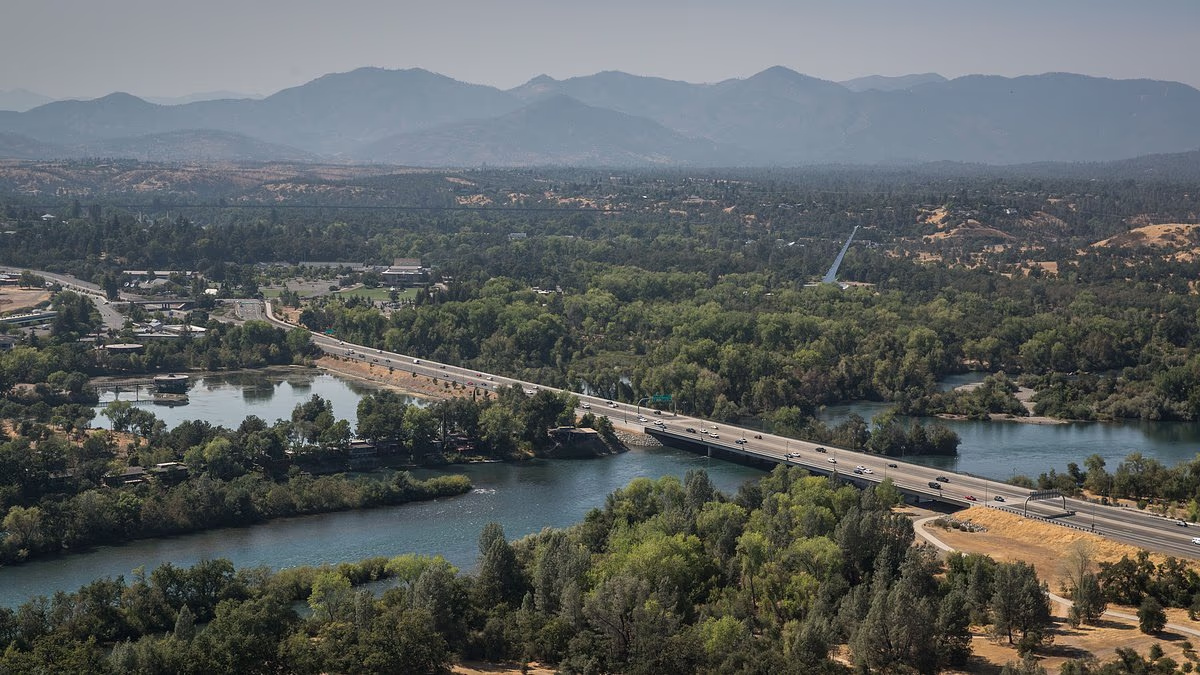
The proposed Sites Reservoir would store up to 1.5 million acre-feet of water diverted from the Sacramento River, pictured

Amanda Mitchum of the Cachil Dehe Band of Wintun Indians called the reservoir proposal “cultural genocide”

Julian Palmisano, a water specialist representing tribal nations, said the project could leave a “scar” for future generations
Julian Palmisano, a water specialist for tribal nations, said the development could become a lasting “scar” for generations to come.
Kasil Willie, policy director at Save California Salmon, also condemned what she called the project’s “sacrifice of tribal cultural resources” and urged officials to strengthen protections.
“We’ve been advocating and asking for protections for cultural resources from the state water board,” she said.
If completed, Sites Reservoir would be California’s first new reservoir since New Melones Lake was finished in 1979.
DISCOVER MORE: Gay NBA National Anthem Singer Responds to Rainbow Flag Fury
The project’s price tag has risen repeatedly. Its estimated cost reached $6.2 billion last year, up from an earlier projection of $4.5 billion.
Jerry Brown, executive director of the Sites Reservoir Project Authority, said the estimate was approaching $7 billion as of Thursday.
“As time passes, the cost of construction escalates,” Brown told the outlet. “It’s a lot like inflation, not that we are changing our cost estimate.”

Kasil Willie of Save California Salmon said she had repeatedly sought “protections for cultural resources” linked to the reservoir project

The reservoir proposal, whose projected cost has climbed over the years, has received strong backing from California Gov. Gavin Newsom
The Sites Project Authority submitted its initial water permit application in March 2022. The proposal was revised several times as environmental and tribal advocates raised concerns.
Brown said the application underwent “the most comprehensive and complete review of this kind of request that’s ever occurred in California.”
“We did everything we possibly could to understand and consider the concern and make adjustments where we could,” Brown said.
He acknowledged that “there are trade-offs that have to be made.”
Newsom has labeled the reservoir a state “priority,” saying California “can’t afford to keep waiting for the water storage we need.”
“The approval shows California can get big infrastructure projects moving again,” Newsom said Thursday.
Wade Crowfoot, California’s natural resources secretary, argued that the state’s water infrastructure “was built for a climate that no longer exists.”
“To adapt, we need to capture water during huge storms and wet winters to get us through worsening droughts,” Crowfoot said. “That’s exactly what Sites Reservoir will do.”
The Daily Mail has contacted the Sites Reservoir Project Authority for comment.