What Is Mobb Deep’s Net Worth?
Mobb Deep is an American hip-hop duo that has a net worth of $6 million.
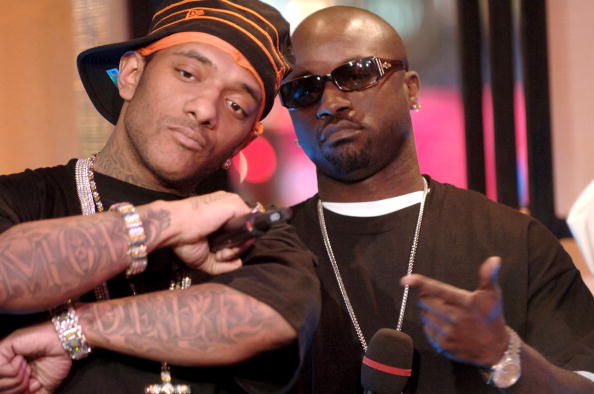
Mobb Deep is best known for helping define the dark, gritty sound of 1990s East Coast rap. Made up of Havoc and Prodigy, the duo emerged from Queensbridge, New York, and became one of the most respected hardcore rap groups of their era. Their 1995 album “The Infamous” is widely regarded as a landmark of New York hip-hop, powered by stark production, bleak street imagery, and classic tracks such as “Shook Ones Pt. II,” “Survival of the Fittest,” and “Eye for a Eye.” The follow-up, “Hell on Earth,” reinforced their reputation as masters of tense, cinematic street rap.
Mobb Deep’s music was built around Havoc’s eerie, minimalist production and Prodigy’s cold, precise lyricism. Together, they created a sound that was menacing, atmospheric, and instantly recognizable. Over the course of their career, they released multiple gold-selling albums, worked with artists including Nas, Raekwon, Ghostface Killah, Big Noyd, 50 Cent, Lil’ Kim, and The Alchemist, and influenced generations of rappers and producers. Although Prodigy died in 2017, Mobb Deep’s catalog remains one of the most important bodies of work in hardcore hip-hop history.
Early Life and Formation
Mobb Deep consisted of Kejuan Muchita, better known as Havoc, and Albert Johnson, better known as Prodigy. Havoc was born on May 21, 1974, in Brooklyn, New York, and was raised in Queensbridge Houses in Queens. Prodigy was born on November 2, 1974, in Hempstead, New York, and came from a family with deep musical roots. His grandfather, Budd Johnson, was a jazz saxophonist, and his mother, Fatima Frances Johnson, was a member of the Crystals.
Havoc and Prodigy met while attending the High School of Art and Design in Manhattan. They initially performed under the name Poetical Prophets before changing their name to Mobb Deep. Their music reflected the atmosphere of Queensbridge, one of the most important neighborhoods in hip-hop history and home to artists such as Marley Marl, MC Shan, Roxanne Shanté, Nas, Capone-N-Noreaga, and Tragedy Khadafi.
Early Career
Mobb Deep released their debut album, “Juvenile Hell,” in 1993. At the time, both members were still teenagers. The album featured production from DJ Premier, Large Professor, and Public Enemy’s Kerwin Young, but it did not become a major commercial success. Even so, it introduced the duo’s raw style and hinted at the darker sound they would soon perfect.
After “Juvenile Hell,” Mobb Deep sharpened their identity. Havoc became a more central production force, and Prodigy’s writing grew more focused and severe. The duo moved away from the broader early-1990s rap sound and toward something colder, more claustrophobic, and more distinctly New York.
The Infamous
Mobb Deep’s breakthrough came in 1995 with “The Infamous.” The album became one of the defining East Coast rap releases of the decade and one of the most important albums associated with Queensbridge. Its production was sparse and haunting, built around dusty loops, hard drums, and an atmosphere of paranoia and survival.
“Shook Ones Pt. II” became Mobb Deep’s signature song and remains one of the most recognizable tracks in hip-hop history. The album also included “Survival of the Fittest,” “Temperature’s Rising,” “Give Up the Goods,” and “Eye for a Eye,” which featured Nas and Raekwon.
“The Infamous” was both a critical and commercial success. It helped establish Mobb Deep as peers of other major New York acts of the era and gave hip-hop one of its bleakest and most influential street-rap blueprints.
Getty
Hell on Earth and Murda Muzik
In 1996, Mobb Deep released “Hell on Earth.” The album continued the sound and themes of “The Infamous” but pushed them into even darker territory. Songs such as “Drop a Gem on ‘Em,” “G.O.D. Pt. III,” and “Hell on Earth (Front Lines)” showcased the duo’s ability to turn street rap into something cinematic and almost horror-like in tone.
Their commercial peak came with 1999’s “Murda Muzik.” The album debuted near the top of the Billboard 200 and included “Quiet Storm,” one of the duo’s biggest singles. A remix featuring Lil’ Kim became especially popular and helped bring Mobb Deep to a wider radio and club audience without sacrificing their core identity.
During this period, Mobb Deep became one of the most respected groups in hip-hop. They were known for their uncompromising sound, their influence on New York street rap, and their ability to make grim material commercially viable.
Later Albums and G-Unit Era
Mobb Deep released “Infamy” in 2001 and “Amerikaz Nightmare” in 2004. Though these albums did not match the critical impact of their mid-1990s classics, they kept the duo active during a changing era in hip-hop.
In the mid-2000s, Mobb Deep signed with 50 Cent’s G-Unit Records. Their 2006 album “Blood Money” included collaborations with 50 Cent, Lloyd Banks, Tony Yayo, Young Buck, and Mary J. Blige. The move introduced the duo to a younger mainstream audience, though some longtime fans preferred the rawer sound of their earlier work.
Mobb Deep later released “The Infamous Mobb Deep” in 2014, a double album that combined new material with unreleased tracks from the era of “The Infamous.” The project was a return to the group’s classic identity and served as their final studio album released during Prodigy’s lifetime.
Solo Work
Both members of Mobb Deep had important solo careers. Prodigy released albums such as “H.N.I.C.,” “Return of the Mac,” “H.N.I.C. Pt. 2,” and “Albert Einstein.” He also wrote the memoir “My Infamous Life,” which gave a detailed account of his career, health struggles, legal problems, and life in hip-hop.
Havoc became a respected producer in his own right. In addition to producing much of Mobb Deep’s catalog, he worked with artists including Nas, Eminem, The Notorious B.I.G., Method Man, The Game, and Kanye West. His production style, defined by dark piano loops, grim basslines, and stripped-down drums, became one of Mobb Deep’s most lasting contributions to hip-hop.
Prodigy’s Death
Prodigy struggled for much of his life with sickle cell anemia, a hereditary blood disorder that caused chronic pain and medical complications. On June 20, 2017, he died in Las Vegas at the age of 42 after being hospitalized following a performance. His death was a major loss for hip-hop and led to tributes from artists across generations.
After Prodigy’s death, Havoc continued performing and honoring Mobb Deep’s legacy. The duo’s music remained widely streamed, sampled, quoted, and referenced by younger artists.
Legacy
Mobb Deep’s legacy rests primarily on “The Infamous,” “Hell on Earth,” and “Murda Muzik,” but their influence extends far beyond those albums. They helped create the sound of cold, cinematic New York street rap. Havoc’s production shaped an entire generation of beatmakers, while Prodigy’s writing style influenced countless rappers with its directness, menace, and vivid detail.
“Shook Ones Pt. II” alone is enough to secure the duo’s place in hip-hop history, but Mobb Deep’s full catalog shows a deeper impact. They were not the flashiest group of their era, but they were one of the most atmospheric, respected, and enduring. Decades after their breakthrough, Mobb Deep remains synonymous with Queensbridge, hardcore East Coast hip-hop, and the sound of survival.
All net worths are calculated using data drawn from public sources. When provided, we also incorporate private tips and feedback received from the celebrities or their representatives. While we work diligently to ensure that our numbers are as accurate as possible, unless otherwise indicated they are only estimates. We welcome all corrections and feedback using the button below.