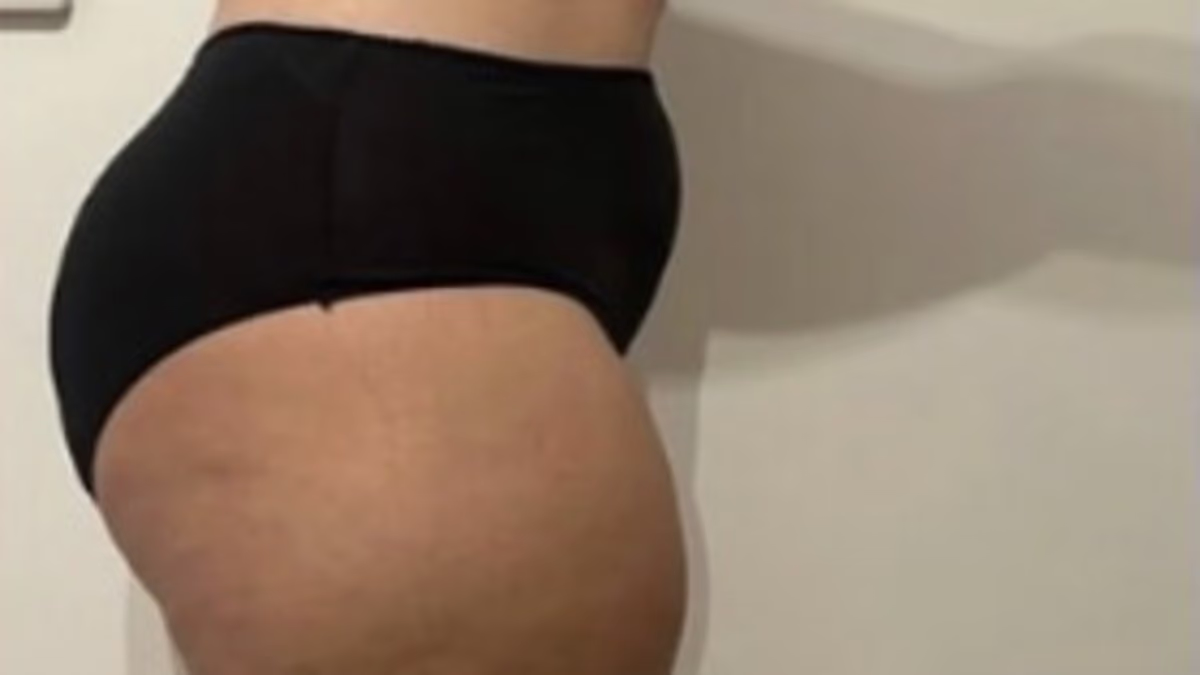

Five years ago, my lower body changed dramatically. In just 18 months, I went from a size 10 to a size 20. I was only 23, and people were quick to question how I had gained so much weight. Was I eating too much? Was I exercising enough? Had I simply become lazy?
The reality was very different. I have lipoedema, a genetic condition that causes an abnormal build-up of fat, usually in the legs and hips and sometimes in the upper arms. It affects approximately one in 10 women, is extremely uncommon in men and currently has no cure.
Before my symptoms appeared, I had always been slim and confident. I started playing rugby when I was eight and eventually became vice-captain of the Widnes Vikings Rugby Team. I was fit, toned and enjoyed spending time at the gym.
Then, seemingly without warning, my weight rose from around 13st to 18.5st in a year and a half. I had never had an unhealthy diet, but I couldn’t understand why my body was changing, so I reduced my calorie intake and increased my workouts. Nothing worked. My hips and legs continued to grow, leaving me completely confused and desperate for answers.
As the lipoedema worsened, even walking became painful and I could no longer play rugby as I once had. Some days I was unable to train, while at night my legs became so restless that I would walk around the house at 3am.
The emotional impact was just as difficult. I felt guilty, as if I had somehow caused my body to change. My shape was suddenly completely unfamiliar, and I had no idea how to dress. Most of the time I hid beneath loose clothing. Even on the rugby pitch, I wore leggings under my shorts because I was so self-conscious about my legs.

Chloé Richardson’s lower body increased from a size 10 to 20 within 18 months after she developed lipoedema, a genetic condition affecting around one in 10 women

Chloé had played rugby since she was eight, but advancing lipoedema made walking painful and stopped her from playing at her previous level
One of the most humiliating experiences happened during a visit to Alton Towers with my boyfriend, Lenny. We spent more than an hour waiting for the Wicker Man ride, only for the lap bar to fail to lock because of my size. Looking back, it may seem like a small incident, but at the time I felt utterly exposed and my confidence vanished.
Eventually, I began searching online for an explanation. While looking through social media and forums, I discovered Shannon Natalia, who openly shares her experience of lipoedema. When I saw her body shape, something clicked. I thought: that’s me. That is what is happening to my body.
Further research led me to Lipoedema UK, a charity that supports women seeking a diagnosis. Many doctors know very little about the condition, while women who gain weight quickly are often dismissed or told their symptoms must be linked to hormones or contraception.
I printed the charity’s information pack and took it to my GP appointment, prepared to explain why I believed I had lipoedema. By chance, my regular doctor was away and I saw a younger GP who recognised the condition and diagnosed me. I know many women are not so fortunate and spend months wondering what is happening, often blaming themselves. When I look at old photographs of my grandmother, she also had the distinctive pear-shaped figure associated with lipoedema. I can’t know for certain, but I suspect she had it too and simply believed it was a normal part of ageing.

Chloé’s parents helped fund the surgery that transformed her life, as lipoedema treatment is not available on the NHS because it is classified as cosmetic

“I can’t believe so many women are unable to access the life-changing treatment I received,” says Chloé
YOU MIGHT ALSO LIKE: Major Blow for Trump as Judge Strikes Down News Network Ban
Liposuction is considered the most effective treatment for managing lipoedema. Yet despite the pain and profound effect the condition can have on mental health, it is not available through the NHS because it is regarded as cosmetic. Women with this genetic illness are left to pay tens of thousands of pounds privately or live without proper treatment, while other procedures, including corrective surgery following botched butt lifts, may be funded. It makes no sense.
The cost was frightening, but I was determined to reclaim my life. I began searching online for loans until my parents saw how badly lipoedema had affected my confidence and generously offered to pay for the operations. I know how lucky I am to have had their support.
There are clinics offering lipoedema surgery in countries such as Spain and Turkey, but once flights, accommodation and medical insurance were included, staying in the UK seemed more practical. Treatment is still hugely expensive, starting at around £6,000 per session depending on the area, and most patients need several sessions. After searching, I found Manchester Private Hospital, where specialist Dr Anuj Purbey could treat me.
Patients can choose to have the full leg, part of the leg or all affected areas treated. I decided to undergo four procedures covering every area affected by the condition.
I experienced very few complications beyond some light bruising. There was significant swelling for a period, so I worked from home for several weeks. Fortunately, my job in logistics meant I did not need to take a long absence from work.
The change was extraordinary, both physically and emotionally. My boyfriend said it felt as though he was watching two entirely different people. I remember going shopping with my mum after surgery and choosing clothes I would once have considered too tight or flattering for me. I was convinced they would look awful, but when I stepped out of the changing room, my mum burst into tears. I began crying too, as did the woman sitting beside her. Afterwards, Mum told me that my face had completely lit up when I walked out. She said I had finally got my glow back.
A year after surgery, I was able to return to rugby. My coach said I was fitter, quicker and more agile than before. When my legs were larger, I often doubted myself and held back during matches. Now I feel much more confident, and that has made me a stronger player.

Doctors warned Chloé that without treatment, her lipoedema could have left her using a wheelchair by the age of 30

“The transformation was enormous, not only physically but mentally. My boyfriend says it was like seeing two different people”
Lipoedema is still part of my life, and I may need further treatment if major hormonal changes cause the condition to flare up, including during menopause. My symptoms became more severe around the time I started using a contraceptive injection, which now makes sense because hormonal shifts can worsen lipoedema.
It is difficult to accept that so many women cannot obtain the treatment that changed my life. My surgeon and I recently spoke at an awareness event, where women told me they were severely depressed and had even considered taking their own lives because they could not afford surgery. Hearing that was devastating.
The financial burden has also made me reconsider having children. I am 28 and may feel differently in the future, but the thought of having a daughter who inherits lipoedema is my greatest fear. My parents worked hard and were able to fund my treatment, but my boyfriend and I are not in the same financial position. I couldn’t bear the idea of telling a child: “Your grandmother paid for your treatment, but we can’t, so you’ll have to suffer.”
Lipoedema UK continues to campaign for NHS-funded treatment. If public money supports so many other procedures, why should women with this condition be excluded? Doctors told me that without treatment I could have been in a wheelchair by the time I was 30. That cannot be fair. Lipoedema affects countless women, and I hope access to care finally improves. Without the surgery, I genuinely would not be the happy and confident person I am today.